…but where I thought it really shone was the first iPods:
This was perhaps the most fun you could ever have navigating a hierarchy of things; it made sense what left/right/up/down meant in this universe, to a point you could easily build a mental model of what goes where, even if your viewport was smaller than ever.
It was also a close-to-ideal union of software and hardware, admirable in its simplicity and attention to detail. This is where Apple practiced momentum curves, haptics (via a tiny speaker, doing haptic-like clicks), and handling touch programmatically (only the first iPod had a physically rotating wheel, later replaced by stationary touch-sensitive surfaces) – all necessary to make iPhone’s eventual multi-touch so successful. And, iPhone embraced column views wholesale, for everything from the Music app (obvi), through Notes, to Settings.
Well, sometimes you don’t appreciate something until it’s taken away. Here are settings in the iOS version of Google Maps:
I am not sure why the designers chose to deviate from the standard, replacing a clear Y/X relationship with a more confusing Y/Z-that-looks-very-much-like-Y. They kept the chevrons hinting at the original orientation – and they probably had to, as vertical chevrons have a different connotation, but perhaps this was the warning sign right here not to change things.
I think the principle is, in general: if you’re reinventing something well-established, both of your reasoning and your execution have to be really, really solid. I don’t think this has happened here. (Other Google apps seem to use standard column view model.)
A viral SpongeBob quote has officially crossed into academic territory, with a new study confirming that mayonnaise can function as a musical instrument.
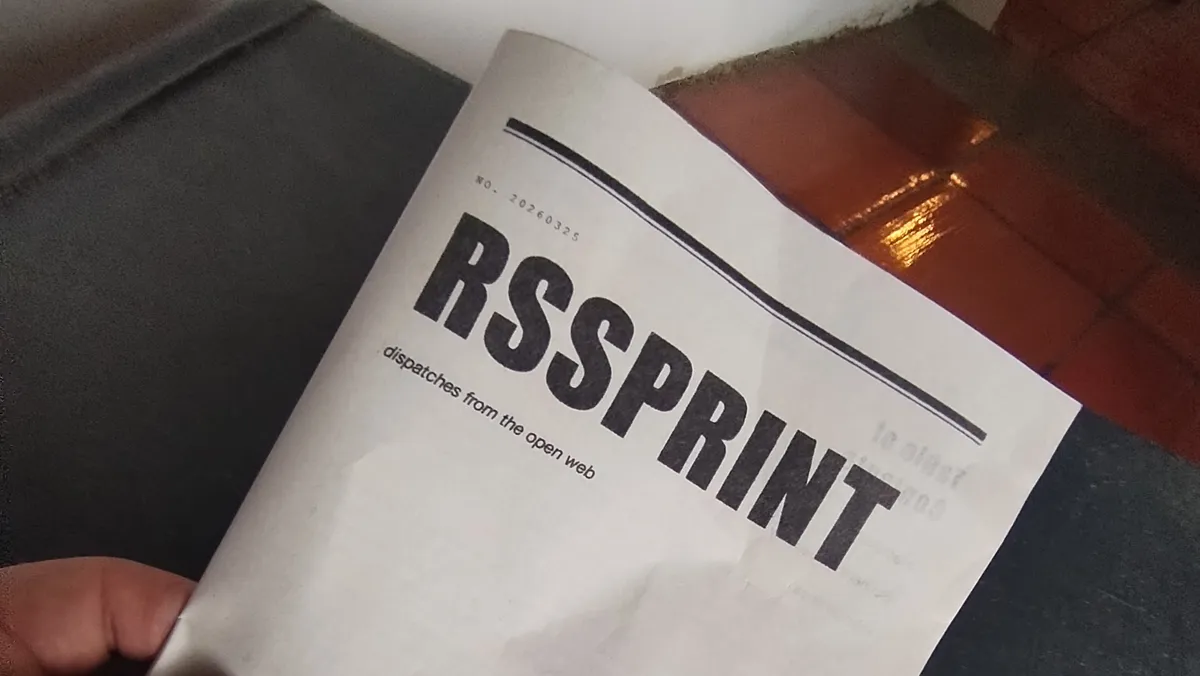
yes move slow, fix things, i like to print things to read off the internet as well. i have been working on a zine maker that would print directly from my rss feed for some time now. i seem to have a functioning version: rssprint.
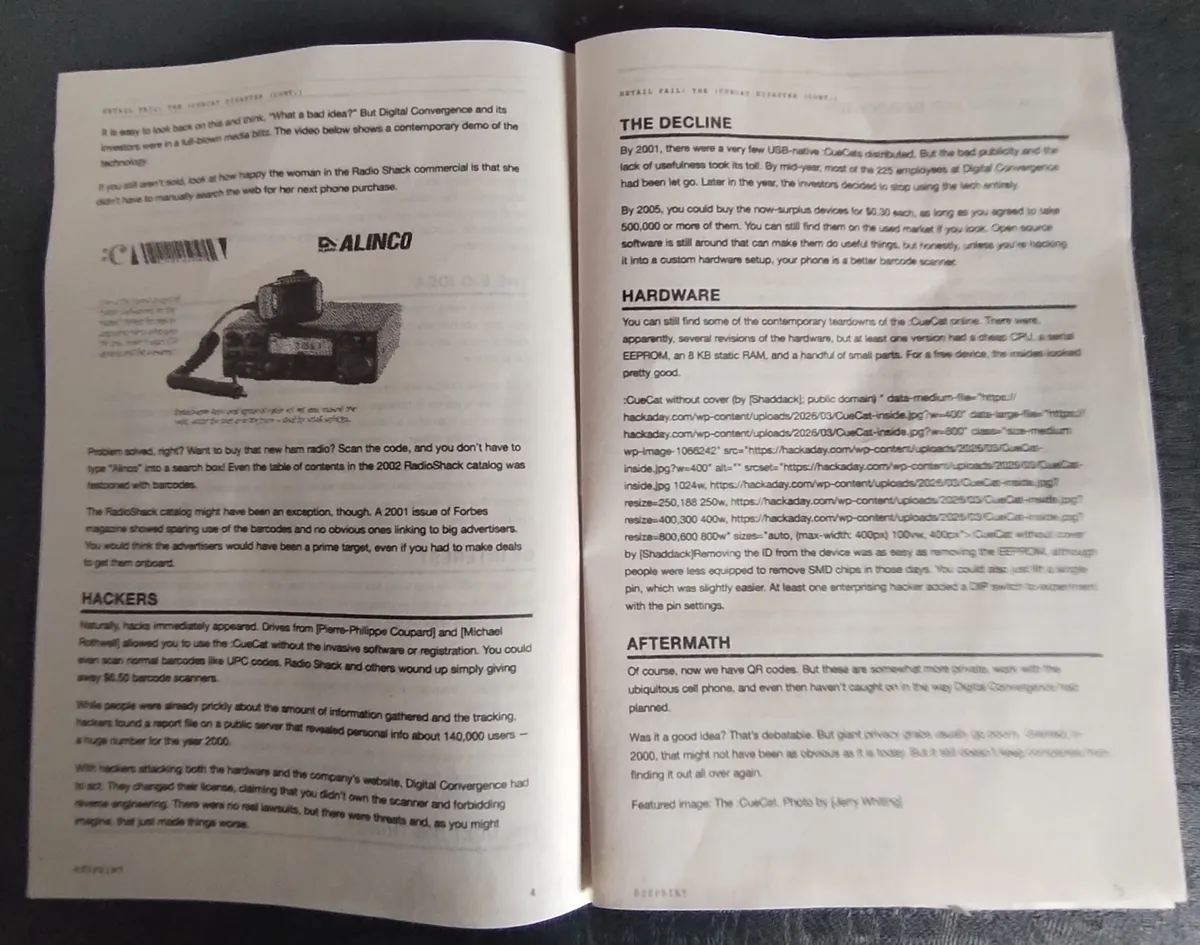
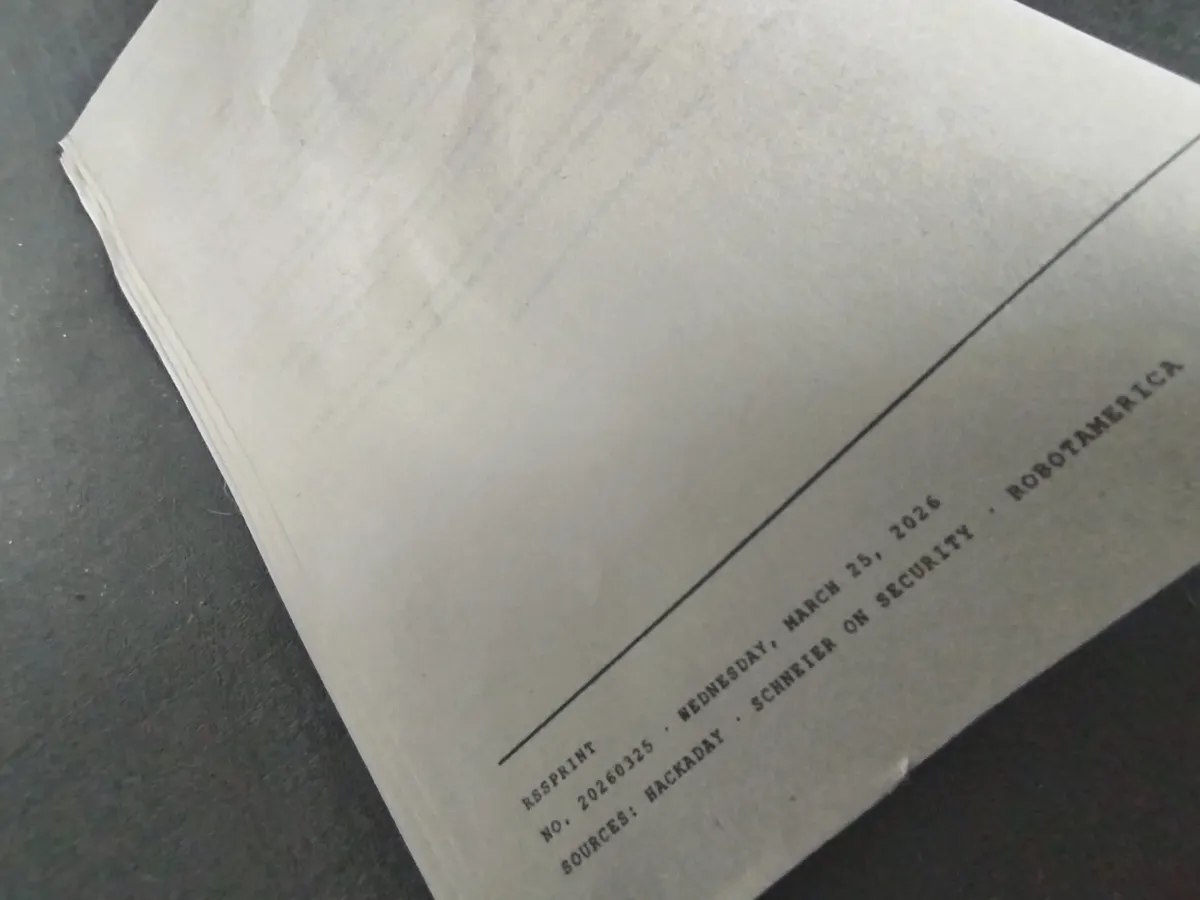
it is a (python, though started as a zsh script) cli utility that provides a tui showing rss feeds that you can add. you can read a long preview of the article, and select to print it out. after selecting your articles it will build am html version of your booklet/zine with a toc + it will be ready to print as a booklet. it even includes dithered b/w images! you can also select between three styles. fun!
Before vaccines, death and disability stalked children. Then shots turned once-common infections into something doctors only read about in textbooks.
When immunization rates drop, however, plagues from the past can come roaring back, as measles has in American communities where parents decided not to vaccinate their children.
Imagine what would happen if even the people who wanted shots couldn’t get them.
Shortly after Kennedy was nominated, questions swirled over how he might overhaul America’s immunization system. Two Stanford University researchers wondered how many people would suffer if vaccination rates dropped or shots became entirely unavailable for four of the most infamous diseases: polio, measles, rubella and diphtheria.
Outbreaks often start when an American catches one of these illnesses abroad and returns home. So epidemiologists Mathew Kiang and Nathan Lo, who is also an infectious diseases doctor, built a model to simulate how the four contagions could spread from sick travelers based on each state’s vaccination rates.
Since a sizable chunk of the population is currently vaccinated, some of the infections wouldn’t get a foothold right away. But over time, as more babies are born and not vaccinated, a larger share of the population would become susceptible.
The professors ran thousands of simulations for each disease, producing a range of possible outcomes. From there, they figured out the average number of deaths and disabilities over a 25-year period.
Their model shows that at current vaccination rates, the nation is already teetering on the brink of an explosion in measles cases — one that would be virtually wiped out with just a 5% increase in vaccination. But if current rates drop by half, all four diseases could return.
The researchers’ modeling of the worst-case scenario assumes a quarter century where no one could get the shots. It doesn’t account for the likelihood of parents going abroad to find vaccines or politicians intervening to ensure drugmakers offer them again.
But the results demonstrate in stark terms how vital shots are and what’s at stake if policy changes interfere with Americans’ ability to vaccinate their kids.
ProPublica shared the key findings of that scenario with the Department of Health and Human Services. An agency spokesperson didn’t address the modeling but said “HHS has not limited access or insurance coverage to any FDA-approved vaccines” and continues to routinely recommend the shots for children.
When they published their paper in early 2025, Kiang and Lo emphasized the outcomes from less extreme drops in vaccination rates, in part because the peer reviewers suggested those were more realistic. Back then, Kennedy was in his earliest days at HHS.
A year later, though, a scenario where no one can get these vaccines doesn’t feel as far-fetched, Kiang said. “Every week that goes by,” he said, “that seems more plausible.”
Lo said that their goal was to show policy makers, “if we make certain decisions, this is what could happen.”
So ProPublica decided to illustrate what a future without vaccines could look like.
If We Lost the Vaccine for Polio
Polio, which mainly affects young children, can invade the nervous system and cause paralysis in the limbs or in the muscles needed to breathe. In the 1950s, many people were kept alive in iron lungs, huge metal contraptions that encased the body up to the neck and used pressure to force air in and out of the lungs.
Ventilators have since replaced the antiquated equipment, but modern medicine can’t reverse the paralysis. The model assumes 1 out of every 200 unvaccinated people who catch polio would become paralyzed.
Imagine if this group of kindergartners became paralyzed by polio.
They would be a tiny sliver of the 23,000 people the model predicts could be paralyzed by polio over 25 years if no one is getting the vaccine.
That 23,000 is the model’s average. It’s the equivalent of more than a thousand kindergarten classes. (The model results range from 0 to more than 70,000 cases of paralytic polio.)
If We Lost the Vaccine for Measles
Measles is among the most contagious diseases in history. A child can spread it before they even get a rash, and the virus can linger in the air for up to two hours after they leave a room.
Famous for its blotchy spots covering the body, measles is a respiratory disease that can lead to pneumonia and swelling of the brain. Before the vaccine, just about everyone got measles, and every year 400 to 500 Americans died.
The model assumes that 3 out of every 1,000 people infected with measles would die.
Over the last 25 years, six people who contracted measles in the U.S. died from the disease.
If Americans could no longer get the vaccine, the model predicts measles would spread quickly.
The model shows that measles could kill about 290,000 people over 25 years.
If We Lost the Vaccine for Rubella
Rubella, also known as German measles, is usually mild in kids and adults. But it’s devastating to a developing fetus. If an infection occurs very early in pregnancy, there’s up to a 90% chance that the baby will be born with congenital rubella syndrome. These children frequently have heart defects, deafness or blindness — and sometimes all three. Many have intellectual disabilities, too. About a third of babies with the syndrome die before their first birthday. A U.S. rubella epidemic in the mid-1960s left 20,000 newborns with congenital rubella syndrome.
If the vaccine went away, we wouldn’t see babies born with congenital rubella syndrome right away. The unvaccinated children would first need to grow into their childbearing years.
The model shows that cases would begin to climb after about 15 years. And within 25 years, 41,000 babies could be born with congenital rubella syndrome.
If We Lost the Vaccine for Diphtheria
Diphtheria, a major killer of children in the 1900s, was known as the “strangling angel.”
The disease’s name comes from the Greek word for leather because diphtheria’s toxin attacks the respiratory tract. Dead tissue builds up in the throat like a thick piece of hide, sealing off a swollen airway.
For those who escape suffocation, the toxin can damage the nerves and heart. Patients who seem better can drop dead weeks later.
An antitoxin made from the blood of horses needs to be given promptly, but it is in short supply. Children elsewhere in the world have died waiting for it.
The disease is rare and much less contagious than measles or rubella. But it’s also far more deadly. The model assumes only one infected traveler would arrive every five years and that 1 out of every 10 unvaccinated people who catch diphtheria would die.
The researchers found it’s very possible nobody would die of diphtheria in the 25-year period their model covers. But we would be playing a game of high-stakes roulette if we lost the vaccine. There is a chance that the strangling angel could become devastating again.
Remember the 23,000 people who could be paralyzed without a polio vaccine? A world without a diphtheria vaccine could be even worse.
On average, the model predicts 138,000 deaths from diphtheria.
In the worst-case scenario, though, the model shows that more than a million people could die from diphtheria in 25 years without a vaccine.
The chance of that is remote, but it’s the gamble we’d all be taking.
That’s an amazing development. When the company rolled out the video-creation site, and later the app, reviewers called it a trailblazer because it combined video creations with sound effects, spoken dialog, and the ability for users to generate a specific character using a reference image and reuse them in multiple videos (a Sora 2 feature called “Character”).
Sora was seen as a threat to jobs in filmmaking and marketing. After watching an early demo of Sora, actor and filmmaker Tyler Perry canceled the construction on an expansion to his film studio in Atlanta, Georgia.
Hollywood’s powerful CAA talent agency in October issued a statement saying that Sora was a threat to the livelihood of actors.
The Los Angeles Times said Sora represented a “firestorm” in the movie industry.
And critics pointed out how easily and convincingly Sora could create realistic videos involving actual people. (OpenAI recently banned users from uploading pictures of real human faces.)
So if Sora was so disruptive, threatening and money-saving, why did OpenAI shut it down?
Though OpenAI claimed on Tuesday that it killed Sora to focus on robotics, critics and skeptics argue that the real reasons include high computing costs, shrinking user numbers, legal threats over copyright, and a strategic shift ahead of an expected fourth-quarter 2026 IPO.
In other words, AI-generated video isn’t worth it, isn’t a priority, and isn’t the technology miracle everybody thought it was.
Still, that’s a long distance from the hype and fear of two years ago. What happened?
The backlash
With each passing day, it becomes clearer that the initial reaction to ever-improving AI generation tools was more of a parlor trick and novelty, and that the novelty is wearing off.
When gamers reacted negatively to Nvidia’s generative AI graphics enhancement tool called DLSS 5, which launches this fall, fearing that it replaces human artists, Nvidia CEO Jensen Huang said, “I don’t love AI slop myself,” but also said that critics misunderstand what the tool is all about.
A TikTok account got millions of likes and followers for so-called “fruit slop” videos about a reality show called “Fruit Love Island” starring “fruit people,” but the backlash against the account came even faster than its rise. Critics say the popularity of the videos represents a society gone mad and a generational crisis for young people. The account is now gone, replaced by hundreds of copycat accounts.
Parents are also concerned that low-quality AI slop is infiltrating children’s content on sites like YouTube. These videos seem mass-produced with little care about content. Many of these videos show the kind of nonsense we’ve grown to expect from AI slop. From an article on Undark:
“The video opens with the children riding, without seatbelts, in the front row of a moving vehicle. The next scene shows the girl defying physics, floating alongside a moving car, while the boy is seated in what appears to be the hood of the vehicle as it travels backward down a busy street. The third and fourth scenes show the children walking in the middle of the road with moving cars behind them.”
But these stories don’t quite identify the larger problem, which is that a huge number of people and businesses think that AI slop is some kind of secret weapon to represent their ideas and brands in the real world.
Small shops and restaurants in New York City, for example, are using AI pictures to advertise food. The food tends to look nothing like the actual food, creating a persistent, low-level false advertising problem among small businesses.
AI slop is used for all kinds of purposes on social media. One of my least favorite uses is to depict historic information. It’s always misleading. For example, I’m a big fan of Mexican history, and I’ve seen multiple AI slop videos showing, say, the island city of Tenochtitlan (the Aztec city that existed in the place where Mexico City now sits). Designed to enable people to visualize the past, they always create a completely false impression of that past.
AI slop: it’s just cheap
AI slop, which is appealing to some users because it’s cheap, and opposed by other people because it’s cheap, is causing unexpected problems.
Brands like J.Crew and Coca-Cola have seen their reputations tarnished when they tried to use AI-generated pictures or videos for marketing actual products.
It’s also causing resentment because one of its main uses is to emotionally manipulate people. The Chinese version of TikTok, for example, is awash with “regret videos,” whereby aging parents with unmarried offspring use AI to try to frighten their kids into marriage.
The shaming videos use AI to “age” women, showing them bitter and alone, often in hospitals, juxtaposed to happy women with their families. Some have dialog, such as: “I regret it. My parents told me to get married and have kids. I didn’t listen, thinking it was too much trouble. Look at me now!,” according to one report.
AI-generated imagery is often used explicitly to evoke in others the emotions you want others to feel: fear, revulsion, outrage, and pity.
AI-generated slop often seeks to bypass reason and get straight at emotions. It replaces words with pictures. Often, the pictures make no sense, and that hardly matters. The aim is emotion. And while some believe emotional manipulation through AI is something they want, a larger number resent being manipulated.
And the world of content is taking a stand as well. In January, San Diego’s Comic-Con banned all AI comics. Last week, the digital comic platform GlobalComix removed AI content. Marvel Comics Editor-in-Chief C.B. Cebulski established a strict anti-AI policy during the New York Comic Con in late 2025.
Book publishers are resisting as well. Hachette Book Group canceled the upcoming release of a horror novel titled “Shy Girl” by Mia Ballard because they suspected the author used AI to write it.
By early 2026, many public libraries had begun writing strict collection policies to filter out books with AI-generated content.
In early 2026, Instagram updated its system to actively penalize highly polished, synthetic content.
So what we’re witnessing is a massive backlash to AI slop, especially visual content like videos and pictures. And the backlash is so great, it even killed Sora.
AI disclosure: I don’t use AI to do my writing. The words you see here are mine. I do use a variety of AI tools via Kagi Assistant (disclosure: my son works at Kagi) — backed up by both Kagi Search, Google Search, as well as phone calls to research and fact-check. I used a word processing application called Lex, which has AI tools, and after writing the column, I used Lex’s grammar checking tools to hunt for typos and errors and suggest word changes. Here’s why I disclose my AI use.
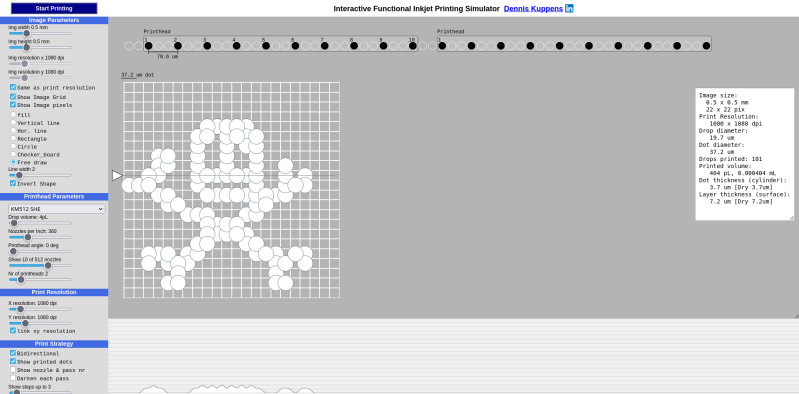
Love them or hate them, inkjets are still a very popular technology for putting text and images on paper, and with good reason. They work and are inexpensive, or would be, if not for the cartridge racket. There’s a bit of mystery about exactly what’s going on inside the humble inkjet that can be difficult to describe in words, though, which is why [Dennis Kuppens] recently released his Interactive Printing Simulator.
[Dennis] would likely object to that introduction, however, as the simulator targets functional inkjet printing, not graphical. Think traces of conductive ink, or light masks where even a single droplet out-of-place can lead to a non-functional result. If you’re just playing with this simulator to get an idea of what the different parameters are, and the effects of changing them, you might not care. There are some things you can get away with in graphics printing you really cannot with functional printing, however, so this simulator may seem a bit limited in its options to those coming from the artistic side of things.
You can edit parameters of the nozzle head manually, or select a number of industrial printers that come pre-configured. Likewise there are pre-prepared patterns, or you can try and draw the Jolly Wrencher as the author clearly failed to do. Then hit ‘start printing’ and watch the dots get laid down.
[Dennis] has released it under an AGPL-3.0 license, but notes that he doesn’t plan on developing the project further. If anyone else wants to run with this, they are apparently more than welcome to, and the license enables that.