
1250 stories
·
1 follower

Meet the artist behind Firefox’s new community-created app icon

1 Share

Last year, the Firefox team set out to test something fans requested: choosing a custom app icon. The experiment was simple. Offer a small set of options and see how people use them.

The team created early concepts, but experiment lead Gabrielle Lussier noticed something was missing. The designs were clean and functional, but none captured the playful, emotional spark people associate with Firefox. That led the team to revisit a collection of fan art shared during Firefox’s 20th anniversary, and one illustration stood out immediately: a warm, whimsical drawing of Firefox hugging the Earth by Dutch illustrator Ruud Hendriks (@heyheymomodraws). 

“I love that it is reminiscent of our original logo from 2004, but modernized and simplified. It’s also adorable! How could you not love it!” said Gabrielle.

To select the icon, open Firefox and head to Settings → General (iOS) / Customize (Android) → App Icon. 
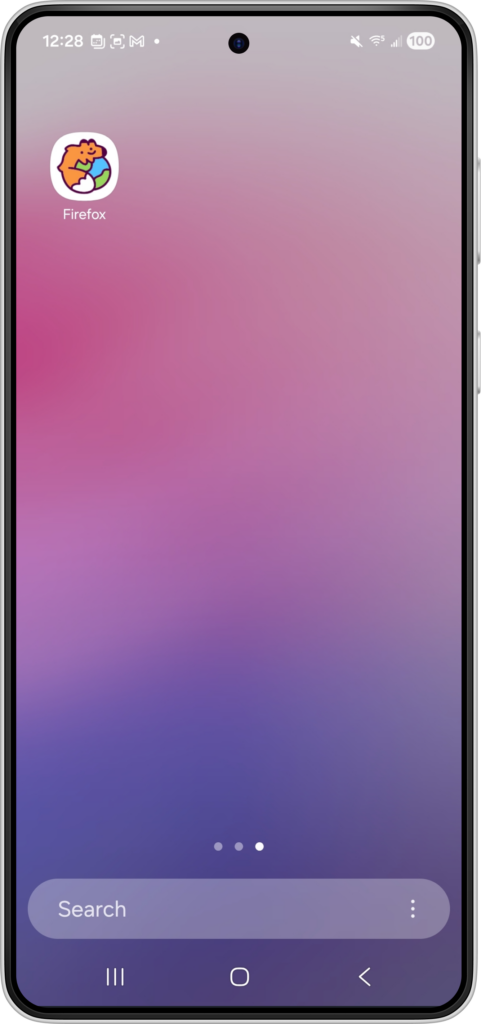
First community-created app icon now available in Firefox

Ruud is known for the charming, joyful characters in his comic series heyheymomo, and he brings that same energy to this design. He originally created the artwork as a quick doodle for fun. Today, it is the first community-created app icon in Firefox.

In the Q&A below, Ruud shares how the sketch came to life, what inspired it, and what it means to see his work appear inside a browser he has used for years.

Can you tell us a bit about yourself and what inspired you to participate in last year’s Firefox 20th anniversary fan art challenge?

The funny thing is, I participated before the challenge was even a thing! One day, I didn’t know what to draw and somehow felt inspired by the cute little fox icon in my dock. I drew my own version as a super loose doodle, completely on a whim, in just a few minutes. I thought it came out pretty cute, so I posted it on my social media just for fun. People vibed with it, and the Mozilla social team picked it up. A few weeks later, I got a message asking if I wanted to submit it for the challenge since they really liked it. Of course I said yes!

What does Firefox mean to you personally, as a brand, a browser, or a community?

I’ve been on the internet for a long time. Firefox has been my favourite browser since forever, and I’m a bit of a creature of habit, so it’s always stuck with me. I like how lightweight and simple it is. Plus, as a visually minded person, I totally judge books by their covers — and I’ve always loved the Firefox icon. It’s so appealing that it made me want to draw it in the first place.
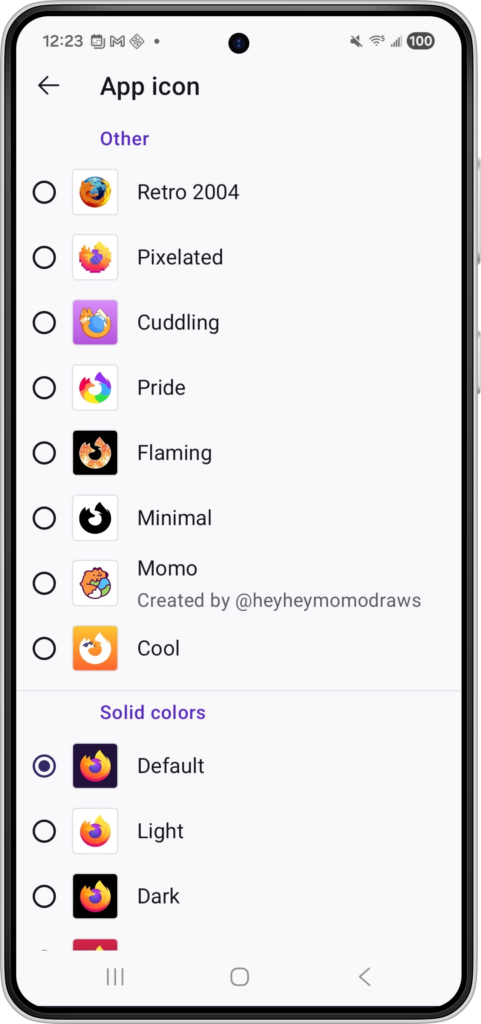
Momo is just one of the many icons you can select

Where did the idea for your “Firefox hugging the Earth” artwork come from?

It’s my little homage to the older Firefox logo, the one that made me a Firefox fan. The new one is very stylish, but the older one has always had a special place in my heart. My own work is usually very cutesy, with smiley faces and friendly characters, so I just drew my own version of it in that style.

This looks hand-drawn. What tools or techniques did you use to create it?

The initial five-minute doodle was just a quick sketch on my iPad using the app Procreate. Since Mozilla was interested in making it an actual icon, I later created a high-resolution, smoother version using vector art.

How did you feel when you learned your artwork would become one of the official Firefox app icons?

As a longtime Firefox fan, I was over the moon and couldn’t believe all of this came from just a silly doodle I did on a whim. I think that’s the beauty of the internet — how something small and spontaneous can take off like that. I’m really honoured, and I hope you all like my silly, little icon.

What a fan-made icon says about how we build

Ruud’s icon shows how product features can come from small, genuine ideas. His artwork delivered exactly what the team set out to explore: a bit of delight, a touch of nostalgia, and a visual style that feels true to Firefox. This project reflects how Mozilla builds. We listen, we iterate, and we look for ways to bring community creativity into the product. Ruud’s contribution shows how users and artists can shape Firefox in ways that feel both personal and unexpected.


Ruud Hendriks is an illustrator from the Netherlands, specializing in cute and whimsical characters. He has extensive experience working on children’s toys, apps, and games, and now focuses primarily on his own comic series, heyheymomo, which follows the adventures of a dog and frog who are best friends.

His work is lighthearted and designed to brighten your day, even if just for a moment. You can explore his comics on Instagram @heyheymomodraws and find prints at heyheymomo.com.

The post Meet the artist behind Firefox’s new community-created app icon  appeared first on The Mozilla Blog.

Read the whole story
mrmarchant
36 minutes ago
reply
Share this story
Delete

Butter: The Softest Flex

1 Share

How we’ve become obsessed with top-chelf butter, one flaky croissant at a time

The post Butter: The Softest Flex appeared first on TASTE.

Read the whole story
mrmarchant
56 minutes ago
reply
Share this story
Delete

Common Threads

1 Share
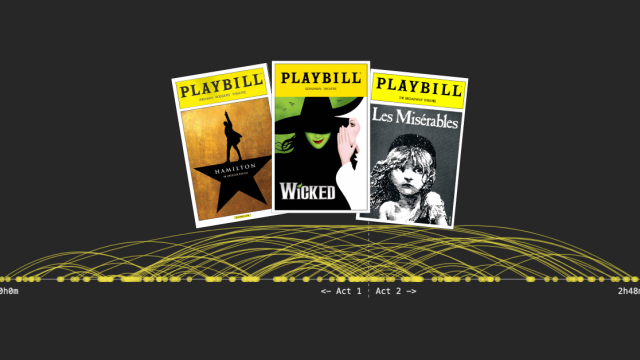
Visualizing how musicals use motifs to tell stories.

Read the whole story
mrmarchant
57 minutes ago
reply
Share this story
Delete

What Robots Can Learn from Classical Indian Dance

1 Share

A swan’s beak, a blossoming lotus flower, a delicate bracelet: These are some of the highly stylized forms the human hand can make in a classical Indian dance form known as Bharatanatyam. The dancers rely on a visual language of gestures, known as mudras—which involve precise finger, wrist, and palm movements—together with dramatic facial expressions and angular body movements to knit together powerful, ancient stories and express heightened emotion.

Nautilus Members enjoy an ad-free experience. Log in or Join now .

Now, a team of scientists is using this language of dancing hands to train robots, which could ultimately lead to better prosthetics design, robot-assisted therapy for stroke survivors, and robots who can perform complex manual tasks such as folding laundry or perhaps even playing a musical instrument.

The mudras, the scientists found, can be broken down into an alphabet of six basic building blocks that together make a good proxy for most hand movements. Instead of teaching robots to mimic natural human gestures, such as pinching or cupping, the scientists are developing methods to teach the machines these artistic forms, first. The researchers published their results in Scientific Reports.

ADVERTISEMENT
Nautilus Members enjoy an ad-free experience. Log in or Join now .

Read more: “Robots Can’t Dance

“We noticed dancers tend to age super-gracefully,” says Ramana Vinjamuri, an electrical engineer at the University of Maryland, Baltimore County, and a co-author of the new research, in a statement. “That was a huge inspiration for us when we started looking for richer alphabets of movement. With dance, we are looking not just at healthy movement, but super healthy. And so the question became, could we find a ‘superhuman’ alphabet from the dance gestures?”

Vinjamuri began hunting for this so-called alphabet of hand movement more than a decade ago. He was inspired to take cues from Bharatanatyam dancers after a 2023 conference on the brain at the Indian Institute of Technology, where he attended a session that explored how ancient Indian traditions could be recruited to help solve modern problems. While brainstorming, he hit upon the idea of looking to mudras to improve robot hand mobility.

ADVERTISEMENT
Nautilus Members enjoy an ad-free experience. Log in or Join now .

Vinjamuri and his colleagues started out by analyzing 30 natural hand grasps used to pick up objects, ranging from a tiny bead to a water bottle. They found six basic building blocks that when combined could be used to describe 99 percent of the gestures. Then they ran the same test with the mudras, and found a different set of six building blocks that could describe 94 percent of the mudras. But when they used these different sets of alphabets to analyze an unrelated set of gestures—15 letters from the American Sign Language alphabet—the mudras-derived alphabet won the contest, according to the scientists.

“The mudras-derived alphabet is definitely better than the natural grasp alphabet because there is more dexterity and more flexibility,” said Vinjamuri.

The researchers are now training a standalone robotic hand and a humanoid robot to use this mudras alphabet. Ultimately, the goal is to make the robot hand more human-like. What looks like art, the robots are learning as the grammar of biology and movement.

ADVERTISEMENT
Nautilus Members enjoy an ad-free experience. Log in or Join now .

Enjoying  Nautilus? Subscribe to our free newsletter.

Lead image: Monstar Studio / Shutterstock

Read the whole story
mrmarchant
57 minutes ago
reply
Share this story
Delete

Are Two Heads Better Than One?

1 Share

Are Two Heads Better Than One?

You're playing a game with your lying friends Alice and Bob.

Bob flips a coin and shows it to Alice. Alice tells you what she saw - but she lies 20% of the time. Then you take your best guess on whether the coin is heads or tails.

Your best strategy is to trust whatever Alice says. You're right 80% of the time.

Now Bob joins in. He makes up his mind independent of Alice, and he _also_ lies 20% of the time.

You were right 80% of the time by trusting Alice.

How much better can you do with Bob's help?

Read the full post on my blog!

Here's a raw link, if you need it: https://eieio.games/blog/are-two-heads-better-than-one

Read the whole story
mrmarchant
58 minutes ago
reply
Share this story
Delete

Instagram Is Generating Inaccurate SEO Bait for Your Posts

2 Shares
Instagram Is Generating Inaccurate SEO Bait for Your Posts

Instagram is generating headlines for users’ Instagram posts without their knowledge, seemingly in an attempt to get those posts to rank higher in Google Search results. 

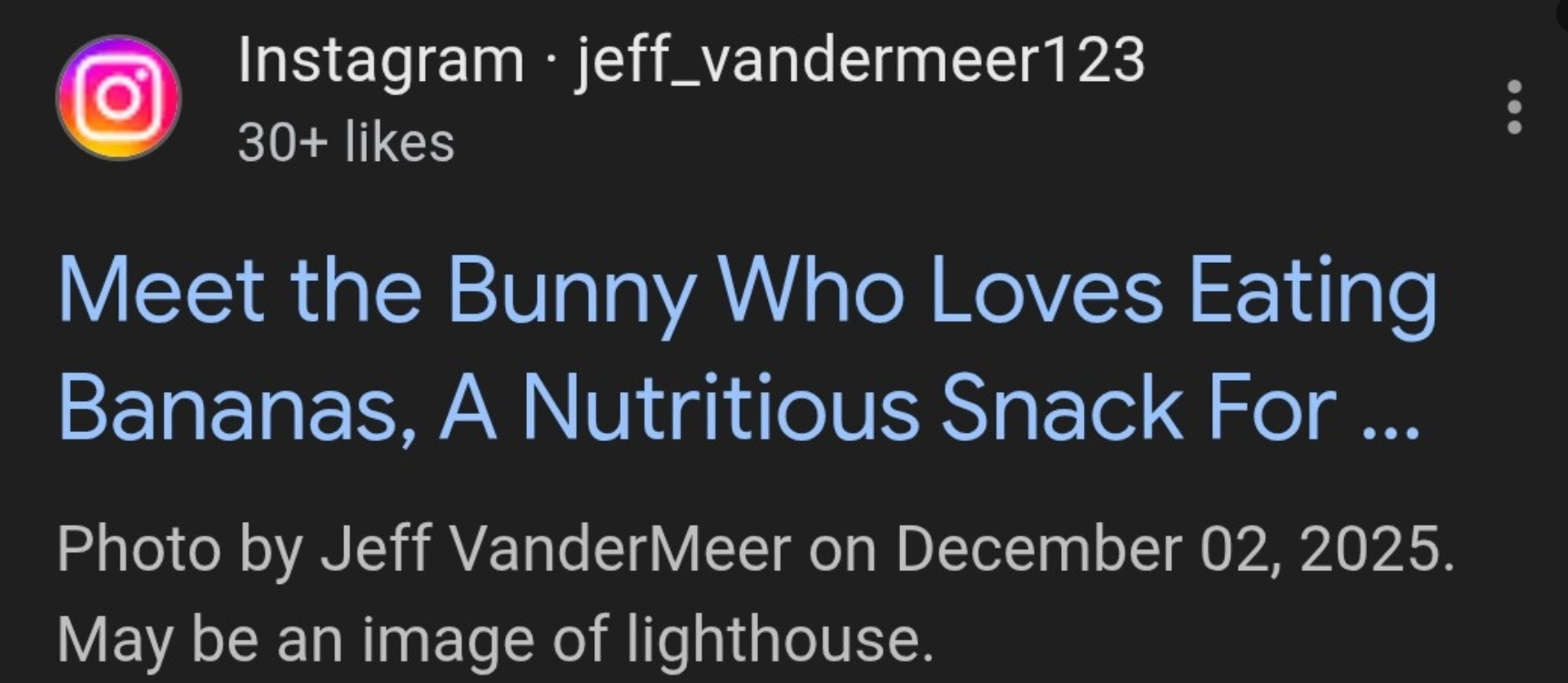
I first noticed Instagram-generated headlines thanks to a Bluesky post from the author Jeff VanderMeer. Last week, VanderMeer posted a video to Instagram of a bunny eating a banana. VanderMeer didn’t include a caption or comment with the post, but noticed that it appeared in Google Search results with the following headline: “Meet the Bunny Who Loves Eating Bananas, A Nutritious Snack For Your Pet.”

Instagram Is Generating Inaccurate SEO Bait for Your Posts
Jeff VanderMeer (@jeffvandermeer.bsky.social)
This post requires authentication to view.

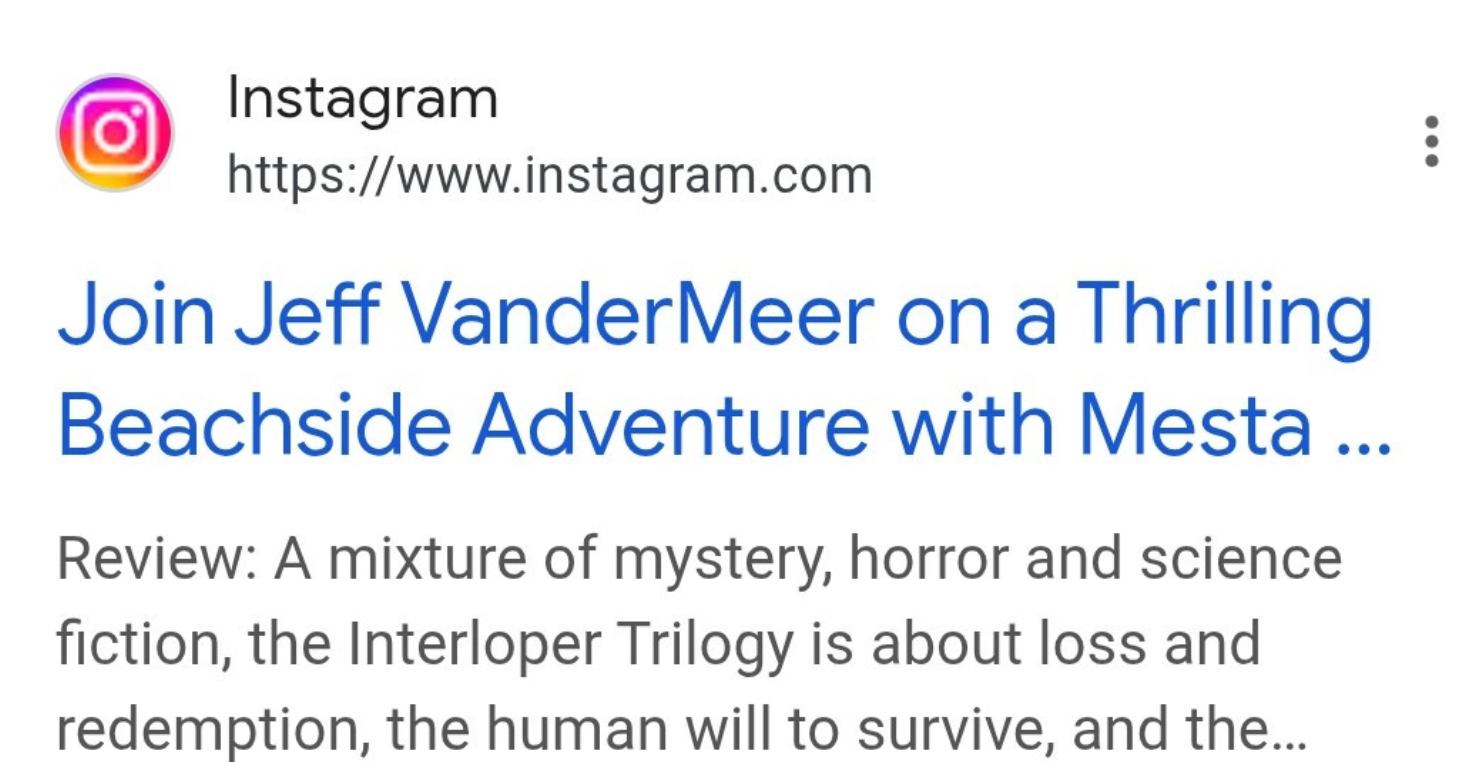
Another Instagram post from the Groton Public Library in Massachusetts—an image of VanderMeer’s Annihilation book cover promoting a group reading—also didn’t include a caption or comment, but appears on Google Search results with the following headline “Join Jeff VanderMeer on a Thrilling Beachside Adventure with Mesta …”

Instagram Is Generating Inaccurate SEO Bait for Your Posts
Jeff VanderMeer (@jeffvandermeer.bsky.social)
This post requires authentication to view.

I’ve confirmed that Instagram is generating headlines in a similar style for other users without their knowledge. One cosplayer who wished to remain anonymous posted a video of herself showing off costumes in various locations. The same post appeared on Google with a headline about discovering real-life locations to do cosplaying in Seattle. This Instagram mentioned the city in a hashtag but did not write anything resembling that headline. 

Google told me that it is not generating the headlines, and that it’s pulling the text directly from Instagram. Meta acknowledged my request for comment but did not respond in time for publication. I’ll update this story if I hear back.

“I hate it,” VanderMeer told me in an email. “If I post content, I want to be the one contextualizing it, not some third party. It's especially bad because they're using the most click-bait style of headline generation, which is antithetical to how I try to be on social—which is absolutely NOT calculated, but organic, humorous, and sincere. Then you add in that this is likely an automated AI process, which means unintentionally contributing to theft and a junk industry, and that the headlines are often inaccurate and the summary descriptions below the headline even worse... basically, your post through search results becomes shitty spam.”

“I would not write mediocre text like that and it sounds as if it was auto-generated at-scale with an LLM. This becomes problematic when the headline or description advertises someone in a way that is not how they would personally describe themselves,” Brian Dang, another cosplayer who goes by @mrdangphotos and noticed Instagram generated headlines for his posts, told me. We don’t know how exactly Instagram is generating these headlines. 

By using Google's Rich Result Test tool, which shows what Google sees for any site, I saw that these headlines appeared under the <title></title> tags for those post’s Instagram pages.

“It appears that Instagram is only serving that title to Google (and perhaps other search bots),” Jon Henshaw, a search engine optimization (SEO) expert and editor of Coywolf, told me in an email. “I couldn't find any reference to it in the pre-rendered or rendered HTML in Chrome Dev Tools as a regular visitor on my home network. It does appear like Instagram is generating titles and doing it explicitly for search engines.”

When I looked at the code for these pages, I saw that Instagram was also generating long descriptions for posts without the user’s knowledge, like: “Seattle’s cosplay photography is a treasure trove of inspiration for fans of the genre. Check out these real-life cosplay locations and photos taken by @mrdangphotos. From costumes to locations, get the scoop on how to recreate these looks and capture your own cosplay moments in Seattle.”

Neither the generated headlines or the descriptions are the alternative text (alt text) that Instagram automatically generates for accessibility reasons. To create alt text, Instagram uses computer vision and artificial intelligence to automatically create a description of the image that people who are blind or have low-vision can access with a screen reader. Sometimes the alt text Instagram generates appears under the headline in Google Search results. At other times, generated description copy that is not the alt text appears in the same place. We don’t know how exactly Instagram is creating these headlines, but it could use similar technology. 

“The larger implications are terrible—search results could show inaccurate results that are reputationally damaging or promulgating a falsehood that actively harms someone who doesn't drill down,” VanderMeer said. “And we all know we live in a world where often people are just reading the headline and first couple of paragraphs of an article, so it's possible something could go viral based on a factual misunderstanding.”


Read the whole story
mrmarchant
1 hour ago
reply
Share this story
Delete
Next Page of Stories