Log in



OpenAI demonstrated their Sora video generator on February 15th, 2024. People freaked out.
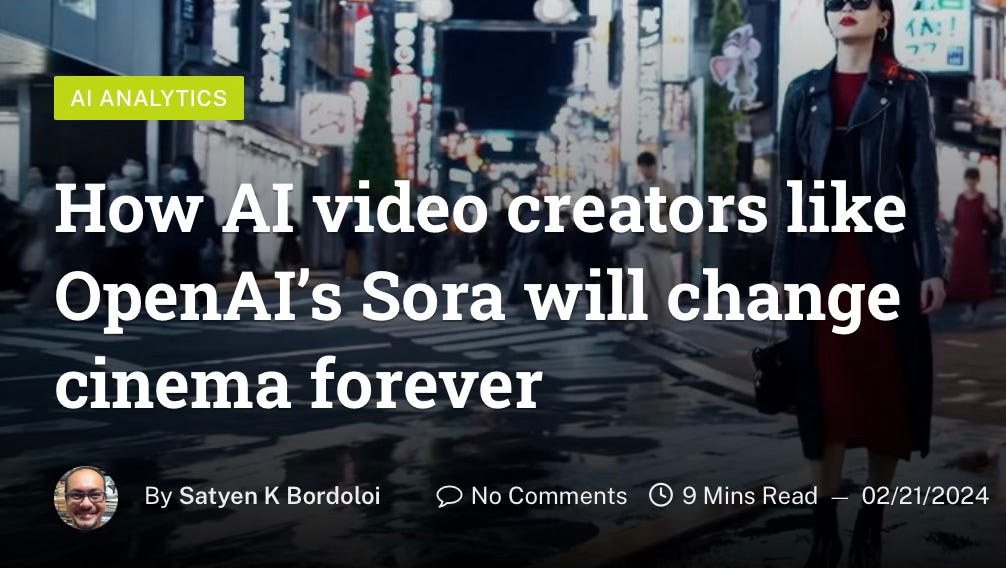
March 26th, 2026 from the New York Times.
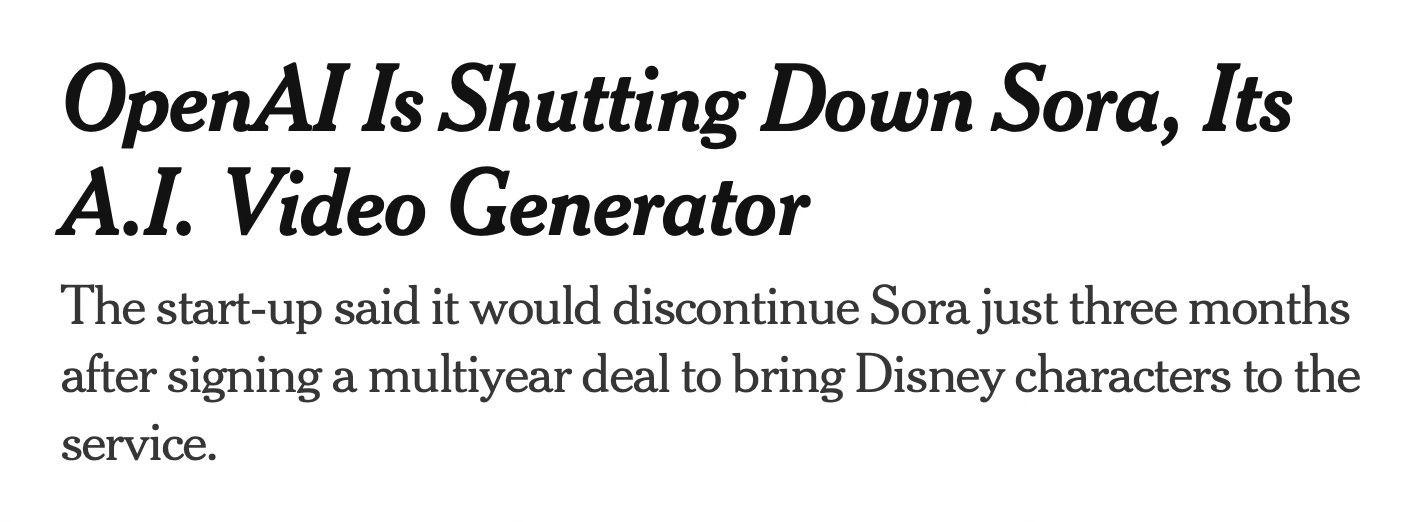
Oops. The video revolution will apparently not be AI generated.
To illustrate what is happening here I want to talk about this 8-track from 1977, Dumb Ditties.
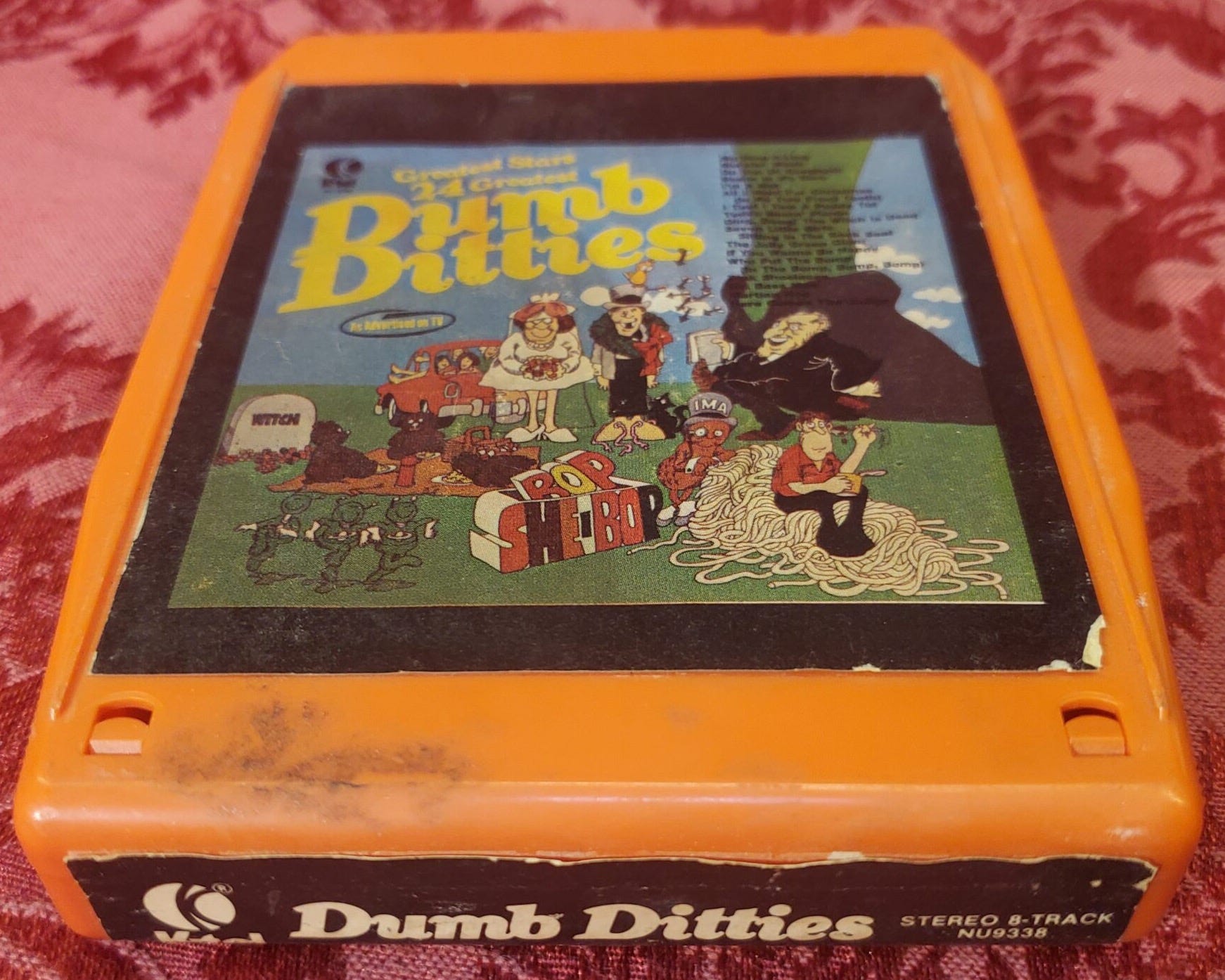
In 1977 I was seven years old, and for a period of time Dumb Ditties was my favorite album. Produced by the K-Tel corporation, Dumb Ditties is a collection of novelty songs like “Monster Mash,” or one of my favorite,s “On Top of Spaghetti,” a song that I’m pretty confident I could sing every lyric to:
On top of spaghetti,
All covered with cheese,
I lost my poor meatball,
When somebody sneezed.
…and so on.
But my favorite song was the one song by a non-novelty artist, Chuck Berry’s “My Ding-a-ling” which is taken from a live performance with a sing-along/call-and-response section where the entire crowd shouts the chorus:
My ding-a-ling, my ding-a-ling
I want you to play with my ding-a-ling
My ding-a-ling, my ding-a-ling
I want you to play with my ding-a-ling
If I have to explain whey a seven-year-old boy would experience a little thrill over being able to march around the house singing a one-and-a-half entendre joke about his privates, you’ve never met a seven-year-old boy.
“My Ding-a-ling” is someone else’s song, and the recording on Dumb Ditties is from the early 70’s, well after Chuck Berry’s heyday as one of the chief progenitors of rock and roll and when he apparently had to resort to novelty song sing-alongs to get the audience going.
I don’t recall listening to “My Ding-a-ling” in the years between 1977 and today as I started writing this newsletter. Pretty quickly my taste in novelty songs moved on to AC/DC’s “Big Balls” from the album Dirty Deeds Done Dirt Cheap, which has an opening verse and chorus that goes like this:
Well, I'm upper, upper-class, high-society
God's gift to ballroom notoriety
And I always fill my ballroom, the event is never small
The social pages say I've got the biggest balls of all
[Chorus]
I've got big balls, I've got big balls
They're such big balls, and they're dirty big balls
And he's got big balls and she's got big balls
But we've got the biggest balls of them all
Ha! Ha! Ha! Ha! Classic! He’s talking about like, you know, dancing in a ballroom, but it’s really about his balls! You know…his balls! (His testicles.) What a legend!
In fifth grade, I thought this ruled, but it is not the part of the AC/DC catalog I return to today.
It is not hard to identify a novelty song in that the only reason you listen to them is for the novelty of the joke, and once you hear the joke a few times, the novelty wears off unless that song is “On Top of Spaghetti” and you sing it just to annoy the people around you, which come to think of it, wears off too. These songs are not good in any sense of the word. Within a few years of Dumb Ditties, “Weird Al” Yankovic would hit on a superior formula, by yoking the novelty to good pop songs you want to hear, but even then the enduring appeal is limited.
I think, pretty much since ChatGPT became widely available (November 30, 2022), we’ve been in repeated novelty cycle when it comes to generative AI applications where we are initially captured and intrigued, only to have some measure of the novelty wear off, leaving disillusionment in its wake.
The saga of Sora is a perfect example, an application that was going to upend all of filmmaking turning into a dead commercial enterprise in just over two years. But this is far from the only example. In fact, I think you can look at almost the entirety of the public discourse around the capacities of this technology as a repeating novelty cycle.
For something to be a novelty, it must simultaneously surprise, and either entertain or upset a status quo. “My Ding-a-ling” is compelling because it authorizes young children to express something nominally dirty without getting in trouble. (At least in my household. Kudos to Mom and Dad knowing what battles to fight, as banning '‘My Ding-a-ling” would have only prolonged my interest.)
Sora threatened to upend all of the television and movie industries, but in reality, making short videos from prompts is, at best, a novelty. OpenAI tried to squeeze some additional juice by striking a $1 billion deal to license Disney characters to the platform, but I think nails it when he likens Sora to “MadLibs,” a fun game to play with your friends like once a year at best.
What is going on that we so readily and serially mistake novelty for something that’s meaningful, transformative, and enduring?
This very famous early response to the appearance of ChatGPT falls into the novelty trap:
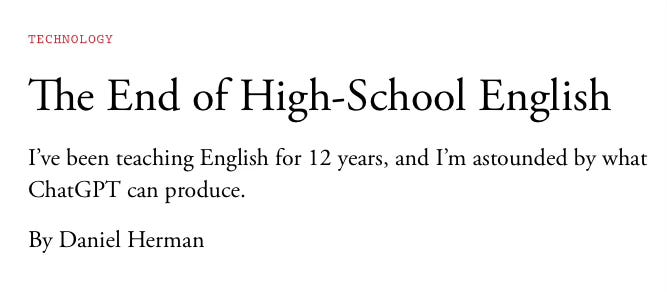
Personally, I was not all that astounded by what ChatGPT could produce (and said so), because the thing the author above is reacting to - near instantaneous surface-level competent five-paragraph essays on academic subjects - is something that I, personally, put no stock in. They did not have value when done by students and so they also don’t have value when they are done by large language models.
Sora appeared to have value when demonstrated in short clips because people were willing, perhaps even eager to extrapolate from 30 seconds of video to extended video narratives on TV and film. But, as it turns out, to make a satisfactory - never mind good - full-length narrative video you need all kinds of capacities that are beyond an AI video generator.
I cannot emphasize enough that all of this was known at the time of Sora’s arrival and yet the coverage was nonetheless breathless. That students should be doing work other cranking out formulaic five-paragraph essays was also a known-known, and yet there we were, hyperventilating over something that wasn’t worth a human’s time anyway.
Am I getting a little frustrated here? Maybe. Three and a half years later and we still can’t manage to hunker down and treat this technology seriously, rather than lurching after novelty. Ethan Mollick, one of our leading experts on generative AI, a guy who will cost your organization six-figures to come opine about this stuff, essentially tests these models with a deliberate novelty, asking them to create a video of “an otter using a laptop on an airplane.” You can see how much better models have gotten at rendering this stuff over the last couple of years, and it’s impressive.
But so what! Who gives a shit? For much less than six-figures I will gladly come to your organization to discuss how if we’re going to manage ourselves in a world with AI technology we cannot take these wild swings based on responses to novelty.
How many of these benchmarks are actually tied to something meaningful in the world? I don’t think the otter on a plane makes the cut.
I have started to collect examples of people falling out of fascination with the novelty and I’ve particularly enjoyed the journey of the writer John Ganz over the last six weeks or so. Ganz is the author of When the Clock Broke: Con Men, Conspiracists, and How America Cracked Up in the Early 1990s, and the newsletter. Ganz is a great example of the virtue of “unique intelligences” that I mulled over a couple weeks ago.
It is a pleasure to see Ganz’s mind at work because it is a mind that is undeniably alive and it is Ganz’s willingness to speak and write his mind that is (in my view) the chief source of his success. So, I was a little surprised when he used Claude Code to “vibe code” something he called “Polybius” an automated program meant to measure the “Authoritarian Consolidation Index” a measure of how close a particular society is to authoritarian rule.
I probably shouldn’t have been surprised because Ganz is obviously a curious person who - like me - had been hearing a lot about Claude Code and autonomous agents, but unlike me had a potentially interesting idea about what he might code.
To be honest, I never bothered looking at Polybius because it had the whiff of novelty to me - as any vibe coded app should - so I was interested to hear Ganz’s remarks in his most recent weekly conversation with :
“I’m back to bearish on AI…I gotta tell you. I’ve been using Claude and I did build something out of it…I don’t think what I built, and maybe this says more about me than it, but I don’t think what I built it working anymore. It’s kind of a piece of garbage, to be honest with you.”
Ganz goes on to say how it requires a lot of work to make it work, time he hasn’t had and if you check out his tone from the conversation with Max Reed you can sense some understandable exasperation. This thing was supposed to be a kind of miracle, but it just isn’t.
Ganz literally says, “I honestly have gotten back to the point where I’d gotten from this is a miracle machine to this is stupid.”
Fortunately, Ganz has all the pre-existing capacities and knowledge (what I call a practice) to understand the limits of what he’s built and the technology in general. He knows the work he wants to do and that the tool is not necessarily well-suited to it. This is the kind of mind we should be inculcating in students, a mind that is resistant to novelty passing for meaning.
I have had people who are enthusiastic about these tools reach out to me and show me things they’ve done that seem amazing, but which, from my perspective, are clearly novelties. I previously linked to a neat piece by where he vibe coded a program to create a “power ranking” of writers since 1965.
It’s neat! But also, so what? What do we do with this? What, if anything, can be extended from this new knowledge? Perhaps something, but the discovery of that something requires us to move past novelty. Maybe Claude Code or autonomous agents are going to change the digital humanities forever, though I maintain that the chief skill of a good digital humanist will remain being able to formulate an interesting question from which an answer makes us want to ask and answer more questions.
I think the most significant, self-inflicted problem institutions and organizations are facing - particularly educational ones - is being seduced by novelty and mistaking novelty for something enduringly meaningful.
On BlueSky I worked through a bit of a thread responding to the announcement that the Canvas learning management system would incorporate AI as a “teaching agent.”

That screenshot gives you the nut of where I stand, but further down I note the use that Canvas envisions, using the AI to make grading rubrics for you. The problem is that student-facing rubrics are themselves a kind of novelty - a persistent one, but a novelty nonetheless - that is poorly aligned with the kinds of experiences and assessments that help students become competent and confident writers.
The agentic AI is adding novelty on top of novelty.
The challenge here is to know novelty when you see it. When it comes to a novelty song all you need is your inherent humanity which rather quickly grows bored of the merely novel. A lot of the music I listened to as a kid proved to be more novelty than enduring. I once could not get enough of Ted Nugent screaming “Anyone who wants to get mellow can get the fuck out of here!” before kicking into “Wang Tang Sweet Poontang” on his Double Live Gonzo album, though truth be told, I did not even understand the reference at the time I would’ve professed myself a fan of “the Nuge.” I don’t listen to Ted Nugent anymore because his music just kind of sucks.
There is other music from that 8-Track era that I do still listen to, such as Marvin Gaye Live at the London Palladium, an album my dad played relentlessly in the Oldsmobile Visa Cruiser Wagon, that I might’ve even complained about at the time, but which is for sure no novelty.
Chuck Berry is appropriately remembered for his contributions to rock and roll, not his novelty song. Ted Nugent is remembered as a guy who shoots things with crossbows and soon enough he will not be remembered at all. There are precisely zero Sora videos that have entered the public consciousness, making it less successful than Dumb Ditties, which at least has “On Top of Spaghetti.” I’m confident Polybius is the least interesting thing John Ganz will make.
Whenever the next amazing AI thing shows up, remember to ask yourself whether or not it’s a novelty and the answer is probably yes.
(Where do you see novelties in the AI world?)
Links
This week at the Chicago Tribune I offered my take on Tana French’s conclusion to the Ardnakelty trilogy, The Keeper.
At Inside Higher Ed I published a very excellent guest post from Julia Morgan McKenzie “In Defense of Long Writing.”
At I published a Q&A with Tim Cain about a new report that collects the specific language on academic freedom in collective bargaining agreements. A great resource for labor work in higher education.
cannot shut up about these books. Nor should she!
Nobody understands or utilizes this platform to better effect than who taught me a new genre of writing, “effort posting,” while also confirming that I will never effort post.
I notice that South Carolina indie publisher Hub City got a very nice shoutout in this profile of the writer Nancy Lemann who is having her earlier work republished in a big way.
Via my friends and in honor of baseball’s opening day, a classic from the archives, “Casey ‘At the Bat’ Responds to that Mean Poem about Him,” by Jeremiah Budin.
Recommendations
1. Creation Lake by Rachel Kushner
2. The Night Circus by Erin Morgenstern
3. A Manual For Cleaning Women by Lucia Berlin
4. James by Percival Everett
5. Hamnet by Maggie O’Farrell
Lesley S. - Marina, CA
For Lesley I’m going with a book that’s a little shaggy in terms of structure and execution, but which I thought gets so much right in its close attention to its characters that it completely won me over, Wayward by Dana Spiotta.
As I was working on this edition UPS delivered a custom package containing Marlon James’ forthcoming novel, The Disappearers featuring the cover image embossed into the cardboard.
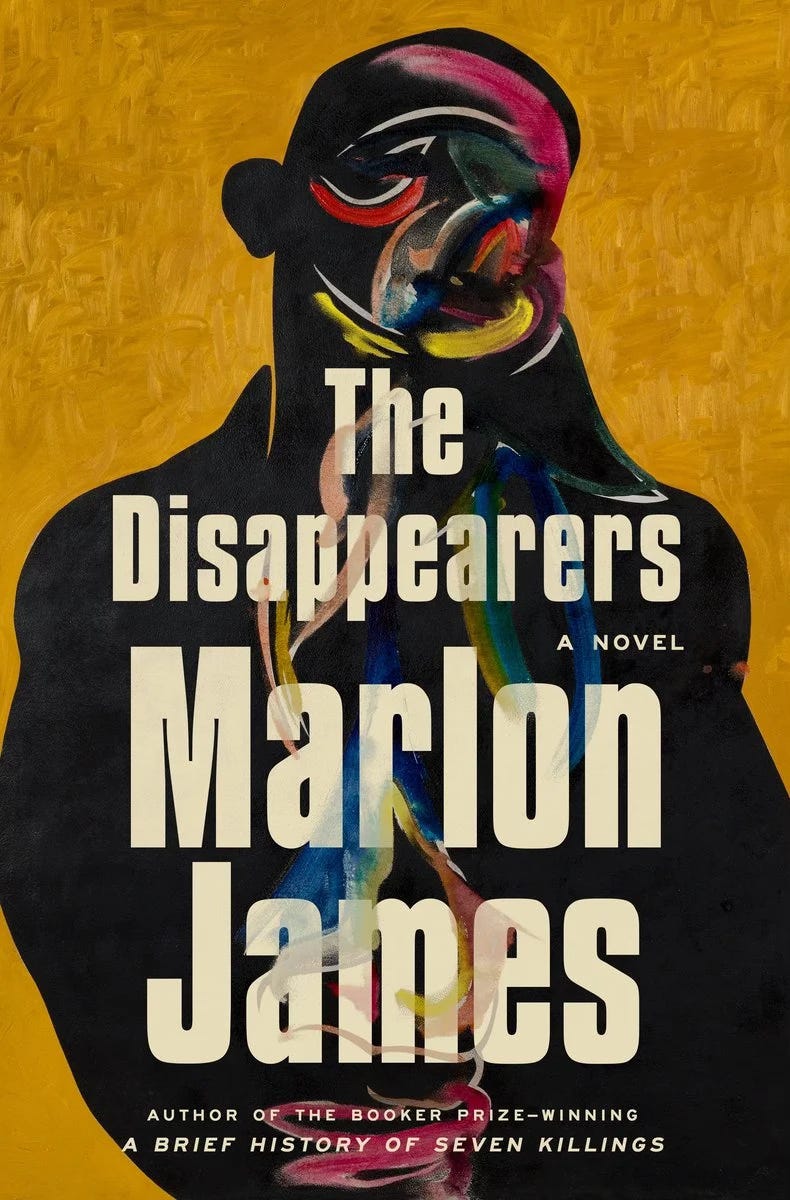
It was so nice that I wanted to disassemble and frame the cardboard. I felt sort of excited that a press can still go an extra mile or two for a book like this. It doesn’t publish until September, so I won’t be reading it until this summer, but it looks great.
I’ll see you all again next week.
JW
The Biblioracle