
1396 stories
·
1 follower

The behavioral cost of personalized pricing

1 Share

Recently my wife and I needed to call a car, so out came the apps to compare rideshare prices. There’s always a bit of variation here, but this time was striking.

My wife’s Uber app quoted her $28, while mine gave me $47. Same app, time, and place - but two wildly-different prices. 

Who knows why? I’m usually more willing to spend than she is, and I bet that's represented on my user profile. I was paying with a gift card, which surely contributes. Maybe it was a price scraping update, comparison shopping detection, or a system that explores “face-in-the-door” high prices before backing down. From the outside, no one really knows. 

That makes me worry. When prices are based on behavior, they incentivize us to behave performatively - after all, the squeaky wheel gets the grease.

Paying different prices is nothing new

Price discrimination has existed for approximately forever - like senior discounts, or coupon books. A business can make a little more money by selectively lowering prices for people who can jump through certain hoops (and might not buy without the discount).

In this simplified demand curve, if the price is $9, then the business only earns $45.

By pricing at $10 for most, with a $1 discount for the price-sensitive blue buyer, the business earns $49 instead. 

Behavioral discrimination isn’t a new practice either. When your internet service provider tells you they’re raising rates, do you pay up? Or do you call customer service, wait on hold, threaten to cancel, get transferred to “retention”, and learn about some exciting new discounts that you qualify for? Not everyone has the time or patience to run this gauntlet - and that’s exactly why businesses do it.

When you bring price discrimination into the digital world, there’s nothing different in any individual case. But as the apocryphal Stalin quote goes, quantity has a quality all of its own. Technology gives us not only quantity, but ubiquity - every piece of behavioral context can contribute to your prices. 

The foundation for pervasive price discrimination is already here

Unlike in meatspace, every digital action can be cheaply recorded and analyzed.

One example is the “abandoned cart” discount, which is so standard that Shopify and Etsy have step-by-step instructions to set it up as a seller. If you add something to your cart but don’t check out, you might get an email reminder later and a little discount to push you over the finish line. With that knowledge, I find myself abandoning carts even when the price was fine before, on the off chance that a discount materializes.

If you ever try to cancel an Amazon Prime membership, they’ll parade you through a dozen webpages and offers to try and keep you around. The last time I canceled a niche SaaS tool, I was surprised to see the same: Another week free? Another month for a dollar? Please don’t go! I didn’t expect this level of sophistication from a small company. Of course, it wasn’t 100% custom - just the work of Churnkey, a “retention automation” company making the classic please-don’t-cancel discount into a standard practice. 

We often think about price discrimination as a discount - great when we benefit, no big deal when we have to pay full price. But what about when you get a “special deal” to pay extra

In December 2025, Groundwork Collective found that Instacart was charging individualized prices. Some people paid 23% more for the exact same item, from the exact same store, at the exact same time.

In Instacart’s response, they said that these pricing experiments were based purely on behavioral data - not on personal or demographic information. Or in other words, they aren’t looking at who you are, “just” what you’re doing.

Andy Warhol once wrote about American culture: 

What's great about this country is America started the tradition where the richest consumers buy essentially the same things as the poorest.

You can be watching TV and see Coca-Cola, and you can know that the President drinks Coke, Liz Taylor drinks Coke, and just think, you can drink Coke, too.

A Coke is a Coke and no amount of money can get you a better Coke than the one the bum on the corner is drinking. All the Cokes are the same and all the Cokes are good.

From The Philosophy of Andy Warhol

Yesterday, we all drank the same Cokes. But today, we scroll hyper-personalized social media feeds, tailored to our so-called revealed preferences. And tomorrow, maybe we’ll pay wildly-different prices for that same can of Coke (and not because you’re Liz Taylor, but because you spend like she does). It’s one more change that fragments our common experiences into isolated silos. 

Personal pricing leads to ritualized posturing

Economically, is this an issue? I don’t really know; if Lucille Bluth is willing to pay $10 for a banana, maybe we should let her - and the shop and platform can split the profits from whatever pricing scheme can make that happen. It’s the invisible hand at work. 

It still gives me the ick. It makes me feel like the business is trying to shrink my “consumer surplus” until I pay a perfect, maximized-for-me price. It makes me feel like an adversary, not a customer, and it makes me feel like I should be a worse person to get a better price. 

Is it just a cultural difference? As a kid visiting China, I once bought a Gameboy game from a nice lady at the electronics bazaar, a great deal at under $10, or so I thought. Later, I got scolded because I didn’t try to haggle: Remember, the first price they offer is just a starting point to negotiate.

I think this new price discrimination - of abandoned carts, the cancellation song-and-dance, and customers segmented down to individuals - is different. The social expectations are flipped: I don’t think the average person knows that haggling is even an option, nor what factors contribute to personalized pricing. 

Only a dummy like me goes to the bazaar without haggling. But today, you probably don’t try to abandon every cart, or switch apps in a way that’s easily-identifiable as comparison shopping, or only buy things that indicate you’re a regular person instead of a fancy rich person. You might let mistakes slide instead of filing a complaint or blasting a company in a Yelp review. All of those events (and who knows which exactly?) are potentially recorded and fed back into your personalized price.

In the future, it’ll be a quiet trick to cultivate your digital reputation of being picky, so you can get the lowest prices and the best treatment. You might even resell that access to someone who wasn’t so careful; or equally likely, spiral into superstitious practice since opaque pricing means you never really know what happened.

On the flip side, we might see the “most favored customer” clause make its way from B2B to consumer contexts - an explicit admission that “the customer is king” is dead. It’ll be an arms race, with data-crunchers looking for opportunities to raise prices while we posture about where we really draw the line. 

I recently got a kick out of the whimsical CAPTCHA Welcome Mat, a site where you have to prove your humanity before you’re allowed to buy the product. In the bonus round, you get to haggle with a chatbot to earn a coupon for 10% off. 
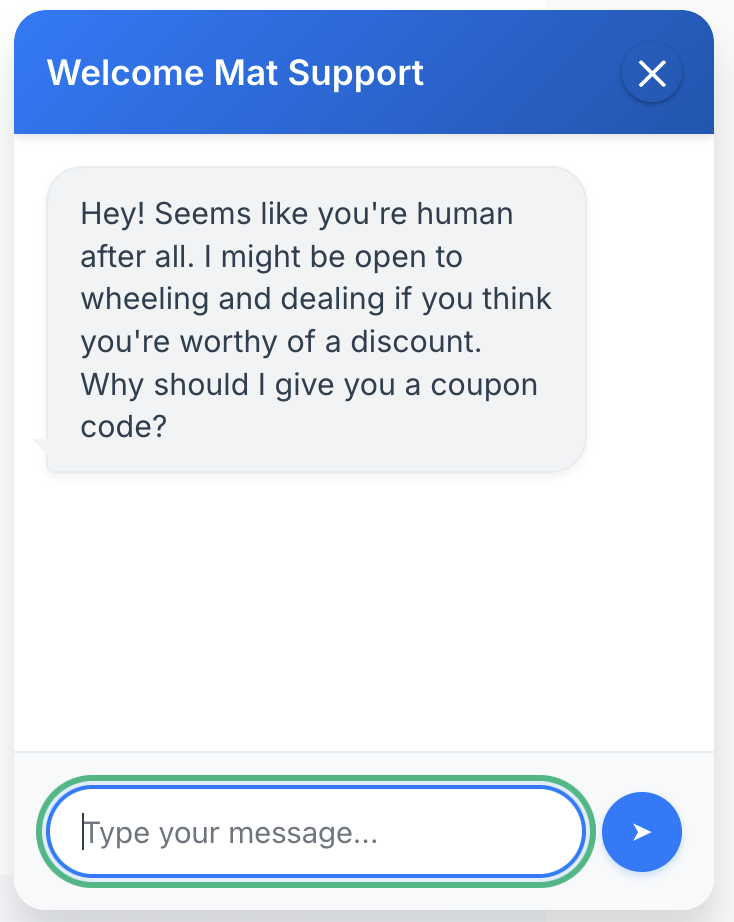
I enjoyed playing that game… once. But I would prefer to be sincere rather than performative, and I don’t love that sincerity is becoming the more expensive option.


Read the whole story
mrmarchant
1 hour ago
reply
Share this story
Delete

We X-Rayed A Suspicious FTDI USB Cable

1 Share

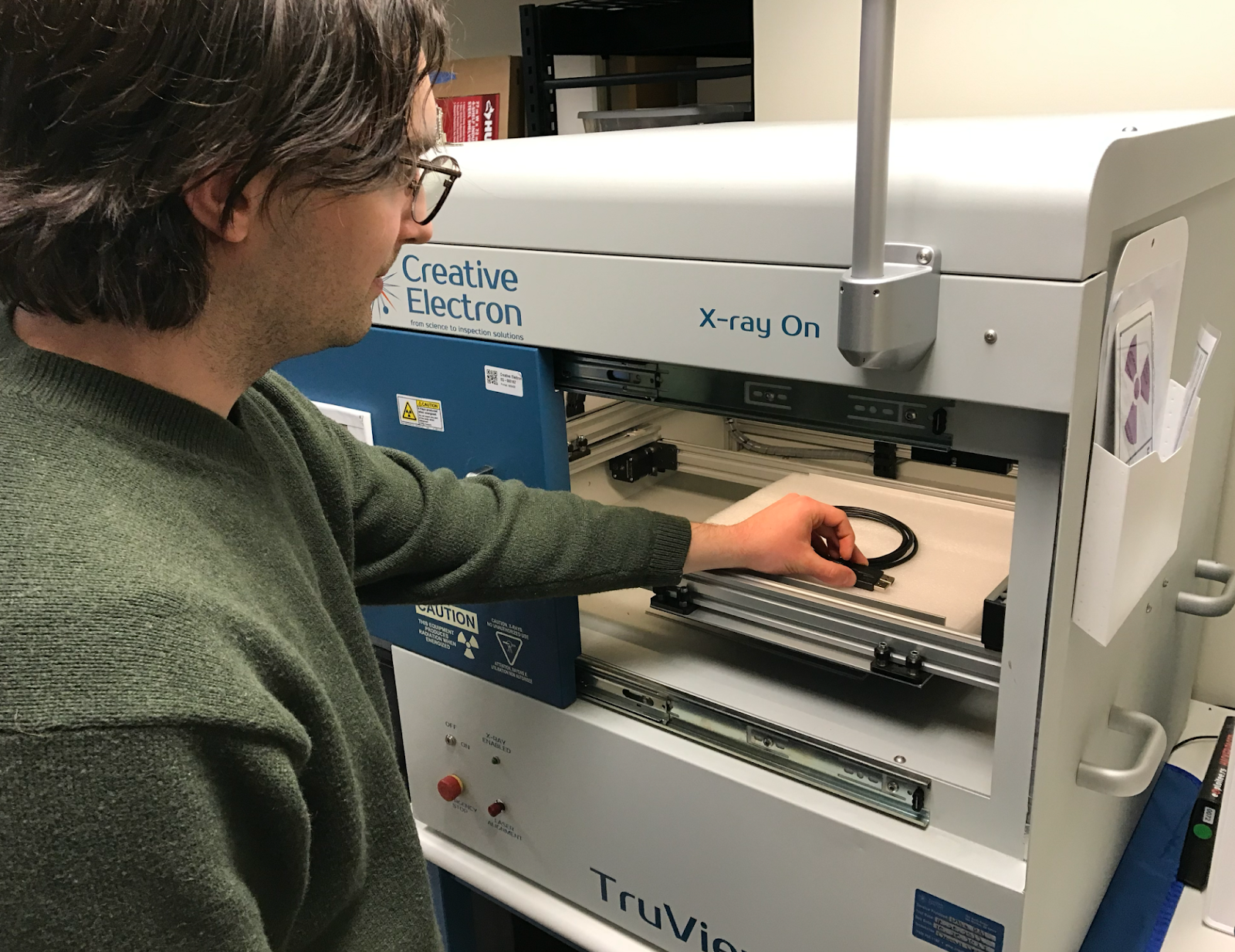
We recently got an industrial X-Ray machine in the Eclypsium office to use to make the next Doctor Manhattan do serious cybersecurity research. In between X-raying yet-to-be released industrial IT technologies on behalf of giant companies whose names we cannot reveal, we have done some other fun experiments.

Eclypsium researcher preparing to x-ray a suspicious USB cable.

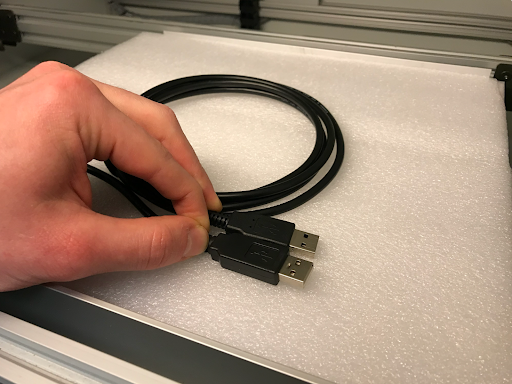
One thing we’ve done with it so far was to x-ray some FTDI USB to UART cables. We had an old cable lying around that seemed a little suspicious and dysfunctional. It worked at slow speeds but it failed when transferring firmware images from a product. These failures drove us to purchase the known good cables from DigiKey, which worked as expected. It is possible that this older cable came from a factory which also produced older generations of authentic FTDI cables, but this particular chip didn’t meet the performance requirements for the FTDI brand. Or maybe it was just a production run based on stolen FTDI IP. Or it is actually completely unrelated to any FTDI IC but has been programmed to claim to be FTDI in software. Unless we could match the silicon exactly to a known supply chain, we can really only speculate.  

In either case, we wanted to see the difference between the suspicious cable and a newer, more obviously “legit” one that cost about $20 from DigiKey. It is not a stretch to assume that a suspicious looking cable is a counterfeit. FTDI has publicly announced issues with counterfeit devices. They have even fought back with drivers which brick counterfeit chips. Some people have even referred to this as vendor sanctioned malware.

Here’s what the two cables look like to the naked eye: 

Take a look at the two x-ray images below and see if you can tell which one is suspicious, and which one is authentic. Then scroll down and we’ll tell you what we see.

Xray of an authentic USB cable.

Before we tell you the answer, here are some clues to look out for in each picture. The authentic cable has the following features visible in the X-Ray image, not shared with the suspicious cable:

  1. Ground pours (reduces impedance and ground loops while improving EMI resistance and thermal dissipation). While there is some debate about the actual value of copper ground pours, they are still used by reputable manufacturers.
  2. Ground stapling
  3. Decoupling passives nearer to the main integrated circuit (IC)
  4. More isolation passives for USB data pins
  5. Thermal pad under IC
  6. Engineered strain relief for wire connections
  7. More solder for mechanical tabs on USB A connector
  8. Smaller/newer silicon process
  9. Better passive alignment

The Big Reveal, and the Implications for Supply Chain Security

OK, the top image above is the authentic cable. The bottom image is the more questionable one.

Did you get it right? If not, go back and see if you can pinpoint the various clues.

The point is that, even when you know what to look for, spotting a counterfeit isn’t necessarily easy. The consequences for a consumer buying a shady USB cable likely aren’t too bad. But what happens when an enterprise gets counterfeit network gear with a backdoor pre-installed? Or when a major bank receives grey market servers with another company’s data on them? Eclypsium has helped major worldwide organizations discover exactly these types of supply chain issues. 

Supply chain risk is growing rapidly. As AI data center projects capture more and more of the global supply for chips, memory, storage, and other key resources, the secondary market for all of these is heating up. The speed and complexity of these supply chains leaves gaps that cyber adversaries can exploit to introduce vulnerable components and backdoors into tech that makes its way into critical infrastructure.

To learn more, grab our white paper on Why Supply Chain Security Demands Focus on Hardware 

The post We X-Rayed A Suspicious FTDI USB Cable appeared first on Eclypsium | Supply Chain Security for the Modern Enterprise.

Read the whole story
mrmarchant
19 hours ago
reply
Share this story
Delete

Quoting Jasmine Sun

2 Shares

If you tell a friend they can now instantly create any app, they’ll probably say “Cool! Now I need to think of an idea.” Then they will forget about it, and never build a thing. The problem is not that your friend is horribly uncreative. It’s that most people’s problems are not software-shaped, and most won’t notice even when they are. [...]

Programmers are trained to see everything as a software-shaped problem: if you do a task three times, you should probably automate it with a script. Rename every IMG_*.jpg file from the last week to hawaii2025_*.jpg, they tell their terminal, while the rest of us painfully click and copy-paste. We are blind to the solutions we were never taught to see, asking for faster horses and never dreaming of cars.

Jasmine Sun

Tags: vibe-coding, coding-agents, claude-code, generative-ai, ai, llms

Read the whole story
mrmarchant
21 hours ago
reply
Share this story
Delete

How To Build Your Own Internet in 2026

1 Share
woman wearing headphones with a background of internet feeds | Illustration: Midjourney

The internet you experience daily—endless scrolling, algorithmic feeds serving content you didn't ask for, AI-generated slop clogging search results—isn't the only internet available. It's just the one that's easiest to stumble into.

You're not stuck with the internet that has evolved alongside the rise of hegemonic platforms. We're 20-plus years into the social internet, and the winners of the last round of audience capture have made clear they're shifting to optimize for social broadcasting instead of networking, to maximize market share and market cap. 

They are not optimizing your experience. Only you can do that.

Each individual act of internet self-determination aggregates into something larger—a distributed resistance to the corporate enclosure of digital space. Think of it like a ladder. Each rung represents a different level of engagement with how you consume, curate, and create your corner of the internet. You don't have to climb every rung, but knowing they exist changes what's possible. And every step you take moves you away from the grip of corporate algorithms and toward an internet experience you can put to use for your own interests and needs.

Level 1: Conscious Consumption

The algorithmic feed—that endless scroll of content chosen by platforms optimizing for engagement over everything else—is optional. You can opt out. Any of these steps will reclaim your attention as the finite resource it is, rather than letting it become a commodity that platforms extract through sophisticated design.

Awareness: The first thing you can do is know your baseline. Just like physical health can be understood through nutrition and fitness vitals, you can track your "internet vitals." How many times a day do you pick up your phone? How much time do you spend on social media? The average American checks their phone 186 times daily and spends 2 hours and 16 minutes on social media. You can check your own numbers in Screen Time (iOS) or Digital Wellbeing (Android). If that kind of specific tracking feels too intimidating, you could start by just educating yourself. Cal Newport's Digital Minimalism, Tristan Harris' work on ethical design, or Renée DiResta's Invisible Rulers are good places to start.

Escape the algorithm—get off Big Social: This is hard. Social platforms like Facebook, Instagram, Snapchat, and X are where you've spent years curating connections and actively following people.

Escape the algorithms within Big Social: These same platforms offer options that are less algorithmically driven. Some offer chronological viewing if you dig into settings. Or you can make a point to just engage with lists of pre-chosen accounts, like your friends' Stories, and not engage with the Feed. You can set your Facebook app to open directly to specific Groups or Marketplace instead of the general news feed. Or sign up for broadcast channels in Instagram where you get direct messages from creators you like, though you will need to check which creators you already follow have these semi-private spaces.

The real key is avoiding the "reels-as-rabbit-hole dynamic" where you start viewing one vertical video and quickly swipe your way down a hole where innocent browsing becomes a long block of passive TV-like consumption.

Level 2: Active Curation

Once you've established some control over what reaches you, the next step is actively building what you want to see. This means moving from defense (blocking what you don't want) to offense (constructing information sources you trust). Doing so creates demand signals for the internet you want to exist. Every subscription, every intentional comment, every creator you support tells the market what's valuable. You're not just consuming differently—you're funding and amplifying alternatives—both within the 'algorithmic marketplace' of the platform and, at a macro level, the larger marketplace of all digital products—or any product within the attention economy

Newsletter subscriptions: Pretty much anything you find on the social internet, you can find through newsletters—from news curators like Tangle or Dave Pell's NextDraft, to conveners like Hunter Harris around culture or Anne Helen Petersen around intentional living. There are aggregators of local news, professional news, sports news. When you subscribe, you're voting with your attention (and sometimes your dollars) for sustainable creator economics. You are asking for a finite ending to your consumption, not infinite scrolling.

RSS feeds: For those less familiar, RSS lets you subscribe directly to websites, blogs, and news sources, receiving updates chronologically rather than algorithmically. Tools like Feedly or Inoreader aggregate these feeds into readable interfaces—much like an email inbox. You can build a feed of local news sources, niche blogs, and independent journalists—a personalized newspaper that updates throughout the day without anyone else's thumb on the scale.

Comment intentionally: The "commenting for the algo" refrain you see from Gen Z creators isn't cynical—it's strategic. Genuine engagement (not just likes but comments that spark conversation) helps surface content to others who might value it—and back to you. Every action you take, from skipping to lingering over content, makes an impact. But nothing does more than commenting. You're not just consuming; you're actively participating in what gets amplified. If you're trying out Threads and think it's a ghost town, you have to start commenting to train your algorithm. If you think LinkedIn pushes overly vanilla, self-congratulatory professional news, try to lean into comments and threaded comments about professional questions you do want to see filling up your feed instead—even with looser connections.

Level 3: Building Alternatives

The highest level involves participating in infrastructure explicitly designed to resist corporate enclosure. This doesn't require technical expertise—just a willingness to try platforms organized around different principles that, frankly, take a little more time to set up or understand.

Engage in smaller networks: I happily check in on Swarm (formerly Foursquare) and keep up with the approximately 40 friends of mine who are still on there too. That fits my elder millennial social graph; there are others for other cohorts. Gen Z folks are still congregating on BeReal. Photo-minded folks seem to be really rallying to Retro. You don't even need to join a "social network"—join Discord servers around specific interests. Follow niche subreddits. Participate in specialized forums or wikis. Through my kids, I've learned to navigate Pokémon and anime forums and wikis to keep up with their interests. For myself, I'm active in far-flung music forums and have preferred destinations for home improvement and men's fashion. These spaces operate at human scale, where reputation and reciprocity matter. They're also where you'll find people doing the most interesting work in specific areas of expertise.

Join the Fediverse or ATmosphere: There are smaller, more customizable, interconnected social platform alternatives to X, Instagram, and TikTok. Mastodon, the most well-known federated social network, lets you join a server (or run your own) that connects to thousands of others through the ActivityPub protocol. Bluesky offers a similar model through its own AT Protocol, with growing momentum and easier onboarding for newcomers through features like "starter packs." Apps like Pixelfed replicate Instagram; PeerTube replicates YouTube.

Join platform cooperatives: These spaces represent a burgeoning future that applies cooperative ownership models to digital platforms. The Drivers Cooperative in New York City is worker-owned, competing directly with Uber and Lyft. The U.K.'s Bristol Cable operates as a reader-owned journalism cooperative. MintStars offers a creator-owned alternative to OnlyFans using blockchain technology. Subvert.fm is doing the same for musicians to replace Bandcamp. These prove that platforms can be owned by the people who create value on them, not just distant shareholders.

The Aggregate Effect

None of these individual acts is revolutionary. Subscribing to a newsletter, joining a Discord server, tracking your screen time—these are small, personal decisions about how you spend your time online. But that's how structural change happens on the internet. The marketplace is driven by the aggregate trends of your individual micro-actions. 

The platforms that dominate your digital life today won through network effects. Each new user made the platform more valuable for everyone else, creating a feedback loop that eventually felt inescapable. The same mechanics work in reverse. Every person who opts for RSS over algorithmic feeds, every creator who builds an audience through owned channels rather than rented platforms, every community that forms around shared protocols instead of corporate silos—these choices compound. What starts as your personal internet gradually becomes a viable alternative internet that others see value in joining.

It's already starting. Mastodon went from 300,000 monthly active users in October 2022 to over 2 million by December 2022, driven largely by individual decisions to leave Twitter/X. Substack hosts over 50,000 publications that make money from subscriptions.. The next wave of media companies are already building this way, with intention.

Perfectly Imperfect is a sceney downtown NYC newsletter that also operates a slow-feed social app with MySpace design vibes. Dave Jorgenson became known as The Washington Post TikTok guy, and five months into independence has a bigger footprint on YouTube than the Post, and he's just as focused on the two-way conversation with his audience via newsletter.

The corporate enclosure of the internet happened gradually, platform by platform, as we traded convenience for control. The reconquest of digital space will happen the same way—individually, incrementally, but aggregating into something substantial. With each act of conscious consumption we each make, we fight enshittification and take steps to build a human-centered internet.

The post How To Build Your Own Internet in 2026 appeared first on Reason.com.

Read the whole story
mrmarchant
1 day ago
reply
Share this story
Delete

Size (and Units) Really Do Matter

1 Share

We miss the slide rule. It isn’t so much that we liked getting an inexact answer using a physical moving object. But to successfully use a slide rule, you need to be able to roughly estimate the order of magnitude of your result. The slide rule’s computation of 2.2 divided by 8 is the same as it is for 22/8 or 220/0.08. You have to interpret the answer based on your sense of where the true answer lies. If you’ve ever had some kid at a fast food place enter the wrong numbers into a register and then hand you a ridiculous amount of change, you know what we mean.

Recent press reports highlighted a paper from Nvidia that claimed a data center consuming a gigawatt of power could require half a million tons of copper. If you aren’t an expert on datacenter power distribution and copper, you could take that number at face value. But as [Adam Button] reports, you should probably be suspicious of this number. It is almost certainly a typo. We wouldn’t be surprised if you click on the link and find it fixed, but it caused a big news splash before anyone noticed.

Thought Process

Best estimates of the total copper on the entire planet are about 6.3 billion metric tons. We’ve actually only found a fraction of that and mined even less. Of the 700 million metric tons of copper we actually have in circulation, there is a demand for about 28 million tons a year (some of which is met with recycling, so even less new copper is produced annually).

Simple math tells us that a single data center could, in a year, consume 1.7% of the global copper output. While that could be true, it seems suspicious on its face.

Digging further in, you’ll find the paper mentions 200kg per megawatt. So a gigawatt should be 200,000kg, which is, actually, only 200 metric tons. That’s a far cry from 500,000 tons. We suspect they were rounding up from the 440,000 pounds in 200 metric tons to “up to a half a million pounds,” and then flipped pounds to tons.

Glass Houses

We get it. We are infamous for making typos. It is inevitable with any sort of writing at scale and on a tight schedule. After all, the Lincoln Memorial has a typo set in stone, and Webster’s dictionary misprinted an editor’s note that “D or d” could stand for density, and coined a new word: dord.

So we aren’t here to shame Nvidia. People in glass houses, and all that. But it is amazing that so much of the press took the numbers without any critical thinking about whether they made sense.

Innumeracy

We’ve noticed many people glaze over numbers and take them at face value. The same goes for charts. We once saw a chart that was basically a straight line except for one point, which was way out of line. No one bothered to ask for a long time. Finally, someone spoke up and asked. Turns out it was a major issue, but no one wanted to be the one to ask “the dumb question.”

You don’t have to look far to find examples of innumeracy: a phrase coined by  [Douglas Hofstadter] and made famous by [John Allen Paulos]. One of our favorites is when a hamburger chain rolled out a “1/3 pound hamburger,” which flopped because customers thought that since three is less than four, they were getting more meat with a “1/4 pound hamburger” at the competitor’s restaurant.

This is all part of the same issue. If you are an electronics or computer person, you probably have a good command of math. You may just not realize how much better your math is than the average person’s.

Gimli Glider

Air Canada 143 after landing” from the FAA

Even so, people who should know better still make mistakes with units and scale. NASA has had at least one famous case of unit issues losing an unmanned probe. In another famous incident, an Air Canada flight ran out of fuel in 1983. Why?

The plane’s fuel sensors were inoperative, so the ground crew manually checked the fuel load with a dipstick. The dipstick read in centimeters. The navigation computer expected fuel to be in kg. Unfortunately, the fuel’s datasheet posted density in pounds/liter. This incorrect conversion happened twice.

Unsurprisingly, the plane was out of fuel and had to glide to an emergency landing on a racetrack that had once been a Royal Canadian Air Force training base. Luckily, Captain Pearson was an experienced glider pilot. With reduced control and few instruments, the Captain brought the 767 down as if it were a huge glider with 61 people onboard. Although the landing gear collapsed and caused some damage, no one on the plane or the ground were seriously hurt.

What’s the Answer?

Sadly, math answers are much easier to get than social answers. Kids routinely complain that they’ll never need math once they leave school. (OK, not kids like we were, but normal kids.) But we all know that is simply not true. Even if your job doesn’t directly involve math, understanding your own finances, making decisions about purchases, or even evaluating political positions often requires that you can see through math nonsense, both intentional and unintentional.

[Antoine de Saint-Exupéry] was a French author, and his 1948 book Citadelle has an interesting passage that may hold part of the answer. If you translate the French directly, it is a bit wordy, but the quote is commonly paraphrased: “If you want to build a ship, don’t herd people together to collect wood and don’t assign them tasks and work, but rather teach them to long for the endless immensity of the sea.”

We learned math because we understood it was the key to building radios, or rockets, or computer games, or whatever it was that you longed to build. We need to teach kids math in a way that makes them anxious to learn the math that will enable their dreams.

How do we do that? We don’t know. Great teachers help. Inspiring technology like moon landings helps. What do you think? Tell us in the comments. Now with 285% more comment goodness. Honest.

We still think slide rules made you better at math. Just like not having GPS made you better at navigation.

Read the whole story
mrmarchant
1 day ago
reply
Share this story
Delete

Chromebooks train schoolkids to be loyal customers, internal Google document suggests

1 Share

Internal documents revealed as part of a child safety lawsuit hint at Google's plan to "onboard kids" into its ecosystem by investing in schools. In this November 2020 presentation, Google writes that getting kids into its ecosystem "leads to brand trust and loyalty over their lifetime," as reported earlier by NBC News.

The heavily-redacted documents, which surfaced earlier this week, are linked to a massive lawsuit filed by several school districts, families, and state attorneys general, accusing Google, Meta, ByteDance, and Snap of creating "addictive and dangerous" products that have harmed young users' mental health. (Snap settled earl …

Read the full story at The Verge.

Read the whole story
mrmarchant
1 day ago
reply
Share this story
Delete
Next Page of Stories