Log in



Lately, I’m working in two kinds of classrooms: ones where the teacher makes good use of digital devices and the other where the teacher makes good use of paper. I’m noticing the same challenge in both classrooms: students come to believe their effort doesn’t matter.
They know they can complete the next slide or not. They know they can answer the next workbook question or not. They know how to hide. Whether they’re working on screens or paper, they know how to look busy and when.
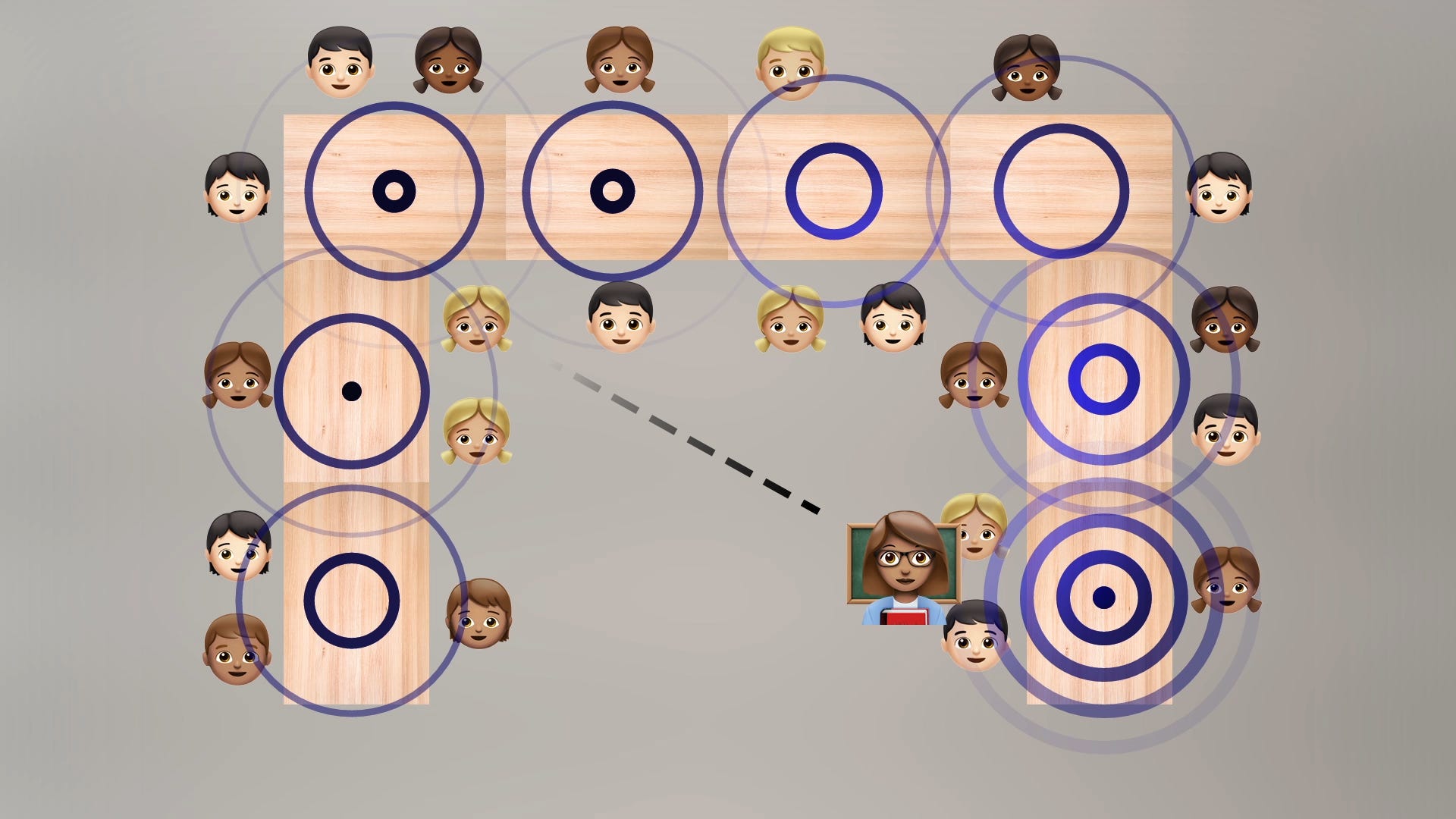
I’m watching the teacher circulate around the room. As she moves, every student inside a two-desk radius locks in on their page, brows furrowed, scribbling or typing, but when the teacher moves on they relax.
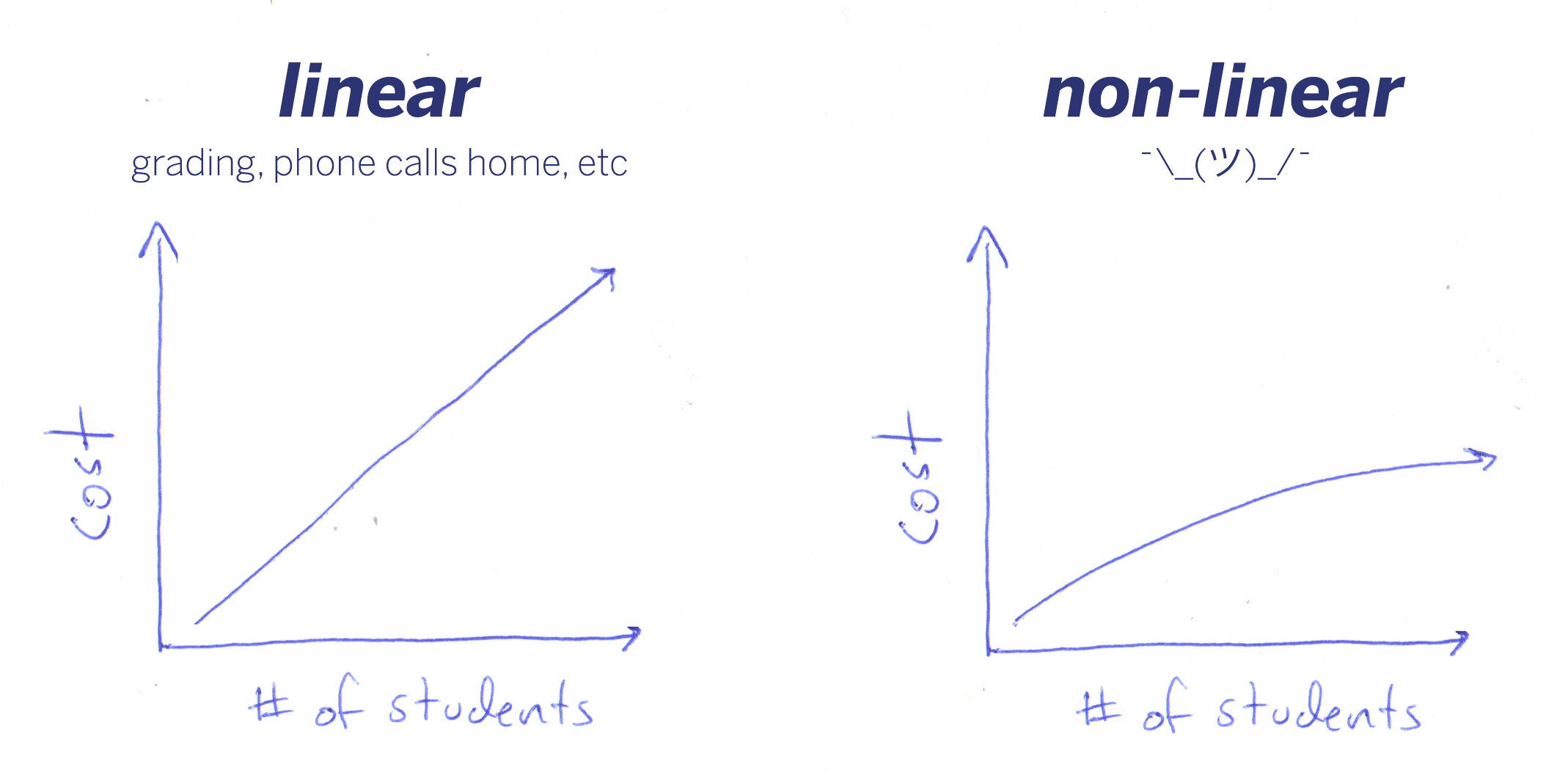
This is the challenge—making difficult cognitive work matter to kids. Teachers have lots of responses to that challenge, but most of them scale the time cost linearly with the number of students. Checking in with students in class. Grading each warmup. Grading each student for participation. Calling home. Grading all the essays. Double the students and you double the time cost for each of those interventions. This is burnout. Teachers need non-linear responses here, responses where doubling the students costs something far less than double the time.
“I have been struggling with this post-COVID,” veteran educator Nick Corley told me recently. “The number of students who only work when watched or for a grade has increased significantly. I’d love to hear what is working for others.”
Five Friends
Me too, Nick. So I pulled in five friends—veteran educators, coaches, total pros, and asked them:
What is a reliable way you can let a bunch of students—students who outnumber you 20 or 30 to 1—know that their effort, their work matters?
Zak Champagne taught elementary math for years and recently became Chief Content Officer at Flynn Education. He said the key to getting kids to sustain their effort with students was giving kids permission to stop sustaining their effort.
Now this might sound counterintuitive, right? Walking away from a math problem sounds like they don’t have to show effort. However, it was my experience that when the young people in my room knew they could walk away, they were less likely to do that. And they would spend more time working through the tough stuff. Sometimes just knowing you have the option to walk away from something is the very thing that keeps you going. And providing that option communicates to them that you trust them.
Katrine Bryan has been a secondary math teacher in San Luis Obispo County, CA, a math teacher coach, and I’ve showcased her teaching here before:
Moving away from a viewpoint focused on teacher knowledge to a stance that celebrates student voice and student actions will build the foundation, showcasing that what a student does matters: to the teacher, to their peers and ultimately, to themselves.
Pam Seda has held down jobs from classroom teacher to district math supervisor. She consults and recently co-authored the book Choosing to See: A Framework for Equity in the Math Classroom, which seemed relevant to my question.
Students learn that their work matters when the audience shifts from the teacher to their peers. When a classroom moves from a group of individuals to a community of learners — where anyone can be an expert and anyone can contribute to the group’s collective knowledge — the stakes become real.
One example: when students do group work, instead of asking each group to present their own process to the class, have the class speculate about how a group was thinking based solely on the work they see. No presentation, no narration — just the work, doing the talking. In this way, the phrase “make your thinking visible” becomes far more meaningful when students know their peers — not just their teacher — are the ones doing the reading.
Dylan Kane is one of the most thoughtful and discerning math educators around, one who teaches at a high level and still somehow has energy to share his thoughts at his newsletter:
I think really hard about the first things students do when we’re launching into a new activity to build momentum. I often start with a simple, straightforward question on relevant prior knowledge, and ask students to answer on mini whiteboards. Students are most likely to see their learning matters when I meet a few basic conditions: I build off of what they already know, I begin with something students can do successfully and that makes them feel smart, and I check to make sure students are learning and adjust when they are not. Mini whiteboards are the best tool I’ve found to help me meet students where they are, adjust on the fly, and build momentum at the start of class.
Tracy Zager is a former classroom teacher, current coach, author of Becoming the Math Teacher You Wish You’d Had, and perhaps most importantly, the editor of my book (still forthcoming):
I need to do the slow and careful and authentic work of creating a community where each student’s thinking and work really does matter–to the student, to their classmates, and to the learning of the class as a whole. My first thought is there are three big components:
I need to choose curriculum and tasks that are worthy of my students’ time and thinking.
I need to give a why behind everything we do–what is the purpose? If I don’t have a good purpose for a task, into the bin it goes.
And I need to teach students how to listen and learn together.
Three of my five friends name the same solution—community development—the slow, halting process of investing one student into the presence and ideas of another. This strikes me as one of those non-linear responses. As the class size grows larger, so too does the size of the community, the number of people who are, potentially, vested in your work. It’s also a solution that runs counter to the prevailing wisdom that what these kids all need is their own individual AI tutor.
I’m trying not to be a reactionary here, complaining about Kids These Days and yelling at clouds, but there does seem to be a dramatic vibe shift post-COVID that I am sure is multi-faceted and I’m grateful to these five friends (and anyone in the comments) each working to understand that shift and work to change it.
Odds & Ends
¶ Tim Daly recently brought useful data to the question of what it takes to get kids to try hard.
What makes kids try harder? Teachers, mostly. Strong teachers motivate students to elevate their effort as the material gets more challenging. A positive school culture - the sum of many teachers and support staff aligned to the same standard - ensures consistency across classrooms and magnifies the effect.
¶ EdSurge reports on a perspective towards AI among teachers that I also find quite common—not optimism, not pessimism, just indifference.
When teachers consider introducing AI tools to students during class time, the calculations they make change. The relevant question becomes: What student learning problem does this tool solve? Many educators are still trying to answer this question, even after several years of exposure to generative AI in some capacity.
¶ Bill McCallum, a lead author of the Common Core State Standards and the Illustrative Mathematics curriculum, is publishing a newsletter. In a recent post, he re-opens a 20-year-old paper from Sweller, et al, celebrating direct instruction and criticizing discovery learning. McCallum checks the citations and finds something interesting in Sweller’s praise for worked examples:
Here is the irony. The strongest evidence-based use of worked examples—carefully designed, presented in contrasting pairs, with structured opportunities for analysis and discussion—looks a lot like the kind of instruction that Kirschner et al would dismiss as constructivist-based minimal guidance. It manages cognitive load, yes, but through thoughtful task design, not by eliminating the need for student reasoning. It is, in fact, a form of productive struggle.
¶ Just a bonkers survey out from RAND. Student use of AI for homework help is up 14%. The majority of those students use AI in spite of their belief that it’s hurting them:
As of December 2025, 67 percent of students endorsed the statement “The more students use AI for their schoolwork, the more it will harm their critical thinking skills” — up more than 10 percentage points from ten months earlier.
¶ Peps Mccrea writes about the ways lesson plan design and user interface design inform one another.
The principles behind great UI are often relevant to the classroom. We could even think of teaching as Learner Interface Design. Here’s what that looks like:
Teachers have to think ten steps ahead of 30 other people, imagining dozens of possible futures, many of them quite bad. It’s fantastic preparation for the work of designing technology.