1311 stories
·
1 follower

What If Heavy Files Actually Felt Heavy?

1 Share

An exploration of pressure-based interfaces and physical metaphors for digital weight

Demo: https://pressureinteraction.netlify.app

I've been experimenting with Force Touch (Apple's pressure-sensitive trackpad) and built a small interactive sketch to explore an idea: what if the effort required to interact with a digital object reflected some physical property?

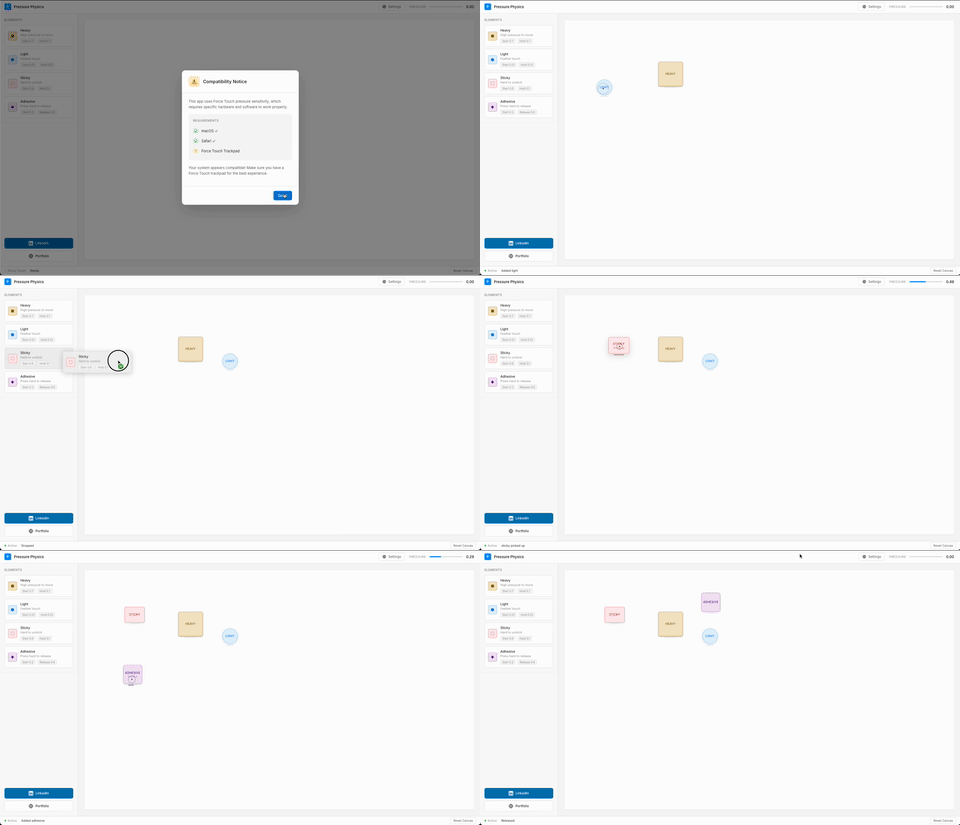
The demo has four types of draggable elements, each with different pressure behaviors.

The Heavy Block requires 0.7 pressure to pick up and to maintain. Drop below the threshold while dragging and you lose your grip. It's genuinely tiring to move.

The Light Bubble has a 0.01 threshold. Practically any touch moves it. It floats and sways when released.

The Sticky Note needs 0.6 pressure to unstick, then only 0.1 to keep moving. The initial resistance mirrors peeling something off a surface.

The Adhesive Pad is easy to grab at 0.2, but requires 0.6 pressure to release. Without enough force, it stays stuck to your cursor. You have to commit effort to put it down.

The shadows respond to physics too. Heavy objects cast tight, dark shadows because they can't be lifted high. Light objects cast diffuse, spread shadows because they float far from the surface. There's also a paper-rustling sound that plays while you're building pressure but haven't yet reached the threshold. It plays longer for heavy objects and is nearly instant for light ones.

It's a toy, but playing with it got me thinking about something larger.

In the physical world, weight communicates something important. It tells us that this thing requires effort, has consequences, and shouldn't be moved carelessly. We've internalized this so deeply that we adjust our grip, our posture, and our attention based on anticipated weight before we even lift something.

Digital interfaces have largely ignored this. Dragging a 4GB video file feels identical to dragging a 4KB text file. Deleting your entire photo library requires the same click as deleting a typo. Moving a computationally expensive ML model feels the same as moving a static image.

Imagine if file weight corresponded to actual file size. That 4GB video would require real pressure to drag. Not impossible, but enough that you'd subconsciously register "this is substantial." The text file would float. You'd develop intuitions about your file system without ever looking at metadata.

Or consider computational weight. What if initiating a query that will hammer your database felt heavy? Not blocked, just resistant. A gentle form of friction that communicates: "this has cost." The expensive JOIN would push back. The indexed lookup would glide.

Or consequence weight. Destructive actions like delete, overwrite, and deploy to production could require more pressure than safe ones. Not a modal confirmation dialog, but a physical sensation of commitment. You'd feel the gravity of the action in your hand.

We already use physical metaphors constantly. Files and folders, windows, drag and drop, scroll. But these are mostly visual. The actual interactions are uniform. Everything clicks the same, drags the same, and responds the same.

Pressure-sensitive input opens up a new dimension. Not to make interfaces harder (though that could be a feature for dangerous operations), but to make them more communicative. Weight becomes information. Effort becomes feedback.

There's something appealing about building intuition through interaction rather than through labels and numbers. When you regularly work with heavy files, you'd develop a felt sense of data scale. When you frequently run expensive queries, you'd develop muscle memory for computational cost.

There are obvious problems with this.Accessibility is the first concern. Not everyone can exert pressure equally or consistently. Any system like this would need alternatives like keyboard modifiers, dwell time, or explicit toggles. The physical metaphor can't be the only path.

Hardware fragmentation is real. Force Touch exists on MacBooks and some Magic Trackpads, but nowhere else. The demo includes a polyfill where hold duration maps to pressure, but it's not the same. This limits practical deployment.

Calibration is tricky. What feels "heavy" varies by person, by fatigue, and by context. The demo exposes all thresholds as user-configurable settings. Not because that's a good UX, but because finding universal defaults seems hard.

And there's a question of whether anyone actually wants this. The current paradigm of uniform interactions with explicit metadata works. It's learnable, consistent, and accessible. Adding pressure-based weight might just be adding friction (literally) without commensurate benefit.

I'm sharing this not as a proposal but as a sketch. The demo is playable and you can feel what pressure-differentiated objects are like. But the broader application to "data weight" or "compute weight" is just speculation.

I'm curious about the philosophy. Is adding physical effort to digital interactions a step toward more embodied computing, or is it artificially constraining a medium that's powerful precisely because it's frictionless? There's a reason we don't make delete buttons physically harder to press on a keyboard.

Try it yourself Demo: https://pressureinteraction.netlify.app

The demo works best on Safari with a Force Touch trackpad, but there's a time-based polyfill for other setups. All the pressure thresholds, shadow parameters, and physics settings are adjustable in the settings panel.

Play with it. Try making the heavy block even heavier or the light bubble even lighter.

——————————————————————————————————————————————————————

Source: Single HTML file with embedded JS/CSS, leverage pressure.js : https://pressurejs.com/
Requirements: Safari + Force Touch trackpad for full experience; polyfill available for other browsers
Settings: All thresholds and physics parameters are user-adjustable
Permalink


Read the whole story
mrmarchant
3 hours ago
reply
Share this story
Delete

What Kind of Teacher Am I?

1 Share

Something different: for my post next week, I’m going to answer reader questions. Any questions you like, big or small, about this post, other posts, something else, whatever. Drop them in the comments or email me, and I’ll answer them in a mailbag post.

I’ve been thinking recently about what kind of teacher I am. I don’t like labels very much, and I don’t feel like I fit well into any box.

If I had to put myself in a box, the word I like is “empiricism.” I have tried just about everything under the sun in math education. I try to stick with what works.

In particular, I stick with what works for the broadest array of students. I’ve worked for three schools as a full-time teacher. If students are motivated, or the school has a strong culture, or other teachers do good work sending me students with skills and habits to be effective math students, I don’t have to get everything right. Without those affordances, I have to be on my game. There are lots of teaching strategies that work well in one school but fall apart in another. The best teaching strategies work no matter where you’re teaching.

Empiricism

The core of empiricism is checking for understanding.

In every class, at least once, I have students grab mini whiteboards. I ask them a question, have every student write their answer on their mini whiteboard, and hold them up on my signal so I can see every student’s answer. I do this to see if students understand the day’s lesson, remember what they learned yesterday, and more.

I’ve made a ton of changes to my teaching in the last few years, and this type of checking for understanding is the core of where those changes come from.

I realize it might sound trivial to say, “I stick with what works.” Doesn’t every teacher? Unfortunately, I don’t think so.

First, one of the unusual things about education as a field is that pretty much everyone experiences education as a student before becoming a teacher. Teachers often begin their career with very strong priors about what type of teacher they want to be. And the reality is, most teachers don’t do very much systematic, full-class checking for understanding. In that context, it’s easy to stick with your preconceptions, or focus on what seems to work for the most vocal students.

Second, I’m defining what works as what helps students learn. There are all sorts of incentives in school that push teachers to focus on all sorts of stuff besides learning. Classroom management. Keeping admin happy. Keeping parents happy. Getting students to like you. All of those priorities are competing for our attention at all times. It’s tough to filter out the noise and focus on learning.

I’m not trying to blame anyone here. I’m arguing that there’s this very strong status quo: some students learn, some students don’t. That seems like the best we can do, so we stick with our preconceptions or follow the path of least resistance. Checking for understanding is scary. It often reveals that many of our students haven’t learned what we thought they’ve learned. But checking for understanding is also the best way to figure out if changes to teaching are making a difference.

Cognitive Science

The second major pillar of my empiricism is cognitive science. Cognitive science provides the most parsimonious, practical explanations for why some teaching works and why other teaching doesn’t. This isn’t a full post on all of cognitive science, but here are the basic principles that I’ve found helpful:

  • Attention is a limited resource. If students aren’t paying attention to something, they won’t learn.

  • Working memory is where we think, but it’s easily overloaded. If I’m asking students to think about too much at once, they will become overwhelmed and learning will be compromised.

  • Long-term memory is the residue of thinking in working memory. The goal is to get students thinking, and what they think about is what they will learn.

  • Effortful processing leads to more durable learning. Not all thinking is equal. I want students to think hard, to think about the deep structure of what we’re learning, and to make connections between ideas. That type of thinking leads to the most useful learning.

  • Schemas help us to retain and apply learning. Long-term memory isn’t a pile of facts, it’s a network of connections. The goal of teaching is to strengthen those connections between ideas, so knowledge is more easier to apply in new situations.

  • Retrieval makes learning stick. The best way to strengthen a memory is to retrieve it — to reach into long-term memory and pull it out. That act of retrieval strengthens memory, and it’s critical to learning that lasts.

The Rest

Checking for understanding and cognitive science are great, but there’s more to teaching. Here are a few other practices I’ve found helpful.1

Break learning down into small steps. Teaching works best when I teach one thing at a time. That means breaking learning down into small, manageable chunks. Teachers often try to teach multiple ideas at once without realizing it. I’m on a constant quest to break learning down into smaller steps and teach one step at a time.

Check for prerequisite knowledge. Learning is cumulative. But that doesn’t mean that students need to know every single thing they’ve learned to access the day’s lesson. Each new topic has specific prerequisites, and the best way to start a lesson is to check these prerequisites and do a quick reteach when necessary.

Connect to prior learning. The most powerful learning is a network of connected knowledge, linking what students already know what we want them to learn. I don’t want to leave these connections to chance.

Practice. Practice is important, but the structure of that practice matters. The best practice comes in multiple rounds of short chunks, with chances for feedback. Too much practice at once puts students on autopilot and stops thinking. Only practice something once and it’s not likely to stick. Effective practice finds a balance by spacing practice out to improve retention, but not practicing too much all at once for efficiency.

Obtain a high success rate. Keep practicing until students are successful. This seems obvious — if students can’t do the thing and you move on, it’s not very likely to stick. A high success rate also has an effect on motivation: students generally prefer doing things they feel good at, and continuing to practice until students are successful helps to support motivation.

Scaffold challenging tasks. There are two parts here. First, give students challenging tasks! It’s easy as a math teacher to focus on predictable, procedural skills. And sure, teach those procedural skills. But also help students to apply that knowledge in lots of different ways. The best way to scaffold these sorts of challenging tasks is to build gradually from what students know to what I want them to figure out. I wrote more about this in my Expansion post.

Retrieve. Practice is important, but it doesn’t stop once students have practiced a few times and achieved a high success rate. I keep asking students to retrieve what they’ve learned so it sticks in long-term memory. If students don’t remember something, I reteach and then start the cycle again. Retrieval was in the cognitive science category above and it connects to practice, but it’s so important it’s worth reiterating.

Hold students accountable. I try to communicate, in everything I do, that my classroom is a place where I expect students to participate and think hard about math. I ask students lots of questions, all the time. If a student isn’t following through, I want them to know that I care about their learning and I will hold them accountable for doing math every day. I wrote more about this in my High Accountability Teaching post.

This Is Boring

This all sounds incredibly boring. And hey, if you dig in the archives of my blog, you’ll find lots of clever fun stuff I do with students. That fun stuff is important. Students spend lots of time trapped in my classroom, it doesn’t need to be ruthlessly efficient every second. But what I’ve found is that it’s not the clever fun stuff that matters most to get students learning. It’s all the boring pieces. The connections between topics, the sequencing in the curriculum, the choices of problems in retrieval practice, the little teacher moves to send a message of accountability. All those little moves add up. It’s my job to help students learn math, and successful learning feels good. Lots of students hate math class not because it’s boring or irrelevant, but because trying to learn math makes them feel dumb. Successful teaching does the opposite, and while it’s not flashy it’s what a lot of students need.

These little moves sound simple, but they’re much harder than they sound in a blog post. With a full class in front of me, with the demands of the curriculum, with my limitations as one human, and new content to teach each day, every lesson is a little puzzle. That’s what I love about teaching, trying to figure out the best way to get lots of the regular, everyday elements of teaching to fit together in a way that helps every student learn.

1

Readers might notice that there’s a lot of overlap between these practices and Rosenshine’s Principles of Instruction. Rosenshine’s article has had a big influence on my teaching. While I have some quibbles, Rosenshine’s principles are probably the closest to a coherent pedagogy I can get behind.


Read the whole story
mrmarchant
3 hours ago
reply
Share this story
Delete

how to turn your favorite substack into a printable newspaper

1 Share

I believe in primarily using the internet to enrich the outernet. I.e. leveraging digital tools and the distributive power of the internet to delight and connect people IRL.

How? With flyers that act as portals to absurd questionnaires, or mysterious phone lines that subvert expectations, or events so ridiculous that people feel compelled to go, and bond with strangers over the absurdity (e.g. Sit Club, Strippers for Charity, The Death Duel to Fix the Ratio).

And I share these projects of mine on Substack. I love Substack. So naturally, I was inspired to make Substack a bit more analog, a bit more whimsical outside its digital bounds.

subscribe to support the scheming

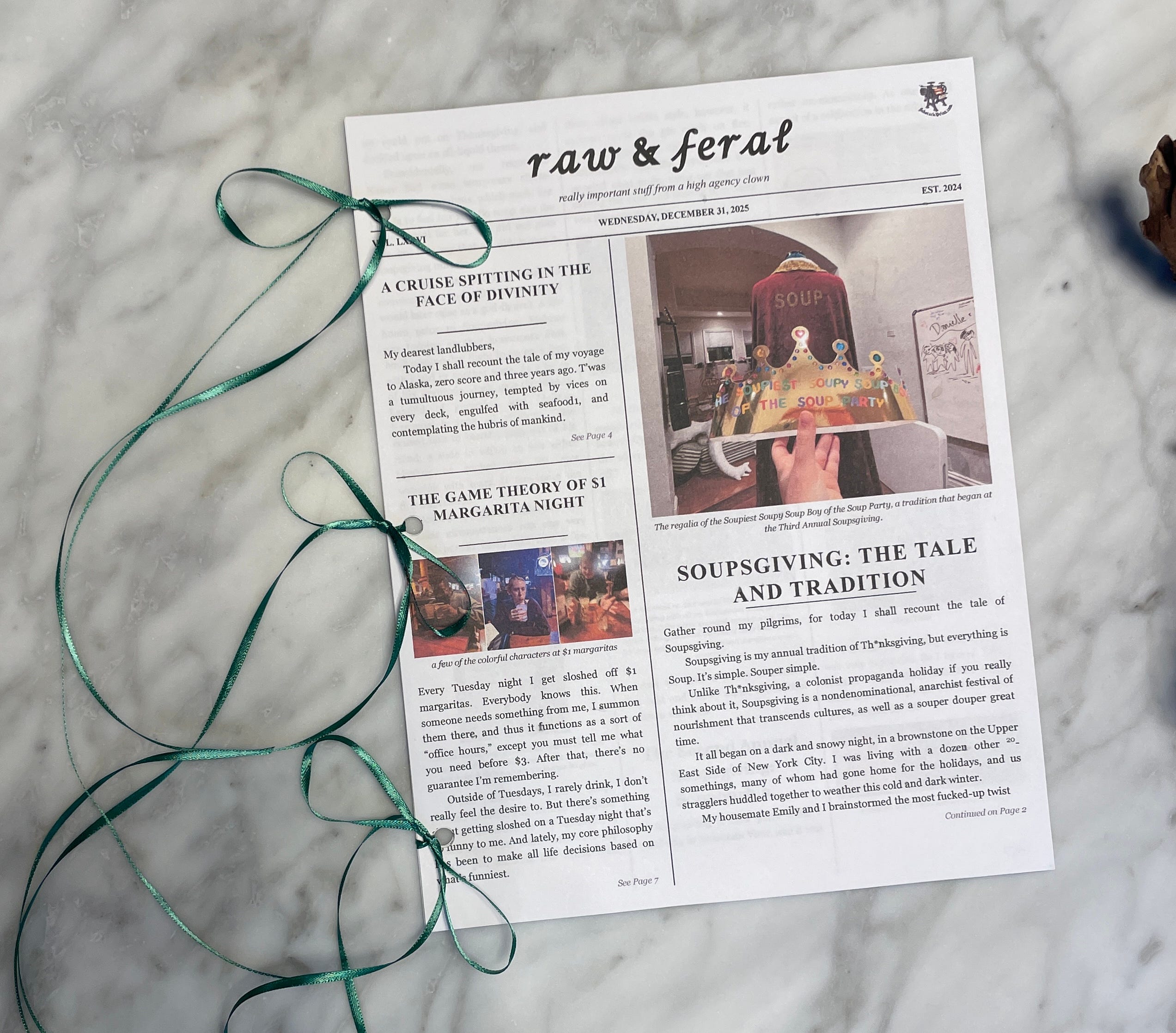
my Substack as a newspaper!

How?

I made a tool that turns any Substack into a printable newspaper, at substackprint.com. Note that the full functionality only works on desktop (mobile dynamic formatting is hard!) but you can see a preview of the front page on mobile.

With all due humbleness, I'm obsessed with this graphic I made.

Inspiration for what to do with your newspaper.

As a reader:

  1. Reduce your screen time. Read without the distraction of all the fast shapes and fun colors and bright lights on your phone.

  2. Bring it to read on a flight / car / bus ride.

  3. Tuck a folded up copy in your bag, to read while waiting in line, instead of filling downtime with scrolling on your phone.

  4. Read performatively in the park or at a coffee shop to pick up baddies.

  5. Gift your friends their favorite Substacker’s writing printed as a newspaper.

As a writer:

  1. Print out your front page and frame it. Look at it every day and exclaim, “I am a writer!”

  2. Bind it with ribbons and leave it around your house for your nosy friends to flip through when they come over.

  3. See if local businesses will stock it! Bookstores, coffee shops, anywhere with a waiting room (beauty saloons, dentist offices), community centers, boutique grocery stores, etc.

  4. Hang up the front page as a flyer on the street with a “read more at <your publication link>” or a QR code, to promote your Substack to passerby. (À la ryan elizabeth peete).

  5. Share your printed & bound newspaper as a gift (works best for family members, close friends, and devoted subscribers).

  6. Get creative with print-on-demand. Display your front page on a postcard, blanket, coffee mug, notebook, stickers. Put your articles on a calendar, wrapping paper, tote bag, puzzle.

  7. Join forces with other writers, get a table at a craft fair, and sell your newspapers!

But danielle (𝓇𝒶𝓌 & 𝒻𝑒𝓇𝒶𝓁), I don’t have a printer!

  • I am a big fan of FedEx printing! That is a good option.

  • Most universities and libraries have printers that anyone can use.

  • There’s many print-on-demand companies! I’ve used vistaprint before.

  • You can get a used printer off Facebook or Nextdoor marketplace, or from a thrift store, for like $20.

Potential future expansions.

I’ll be honest guys, in the four days I made this, I wanted to rage-quit several times.1 There were many more features I wanted to include, but resigned that I’d add later if there was sufficient interest. Including:

  • Combine articles from different Substacks into one newspaper. This was part of the original plan, but it ended up being much more technically complex.2

  • Turn a Substack into a printable zine. This is another format I’d love to have! Also, a magazine and book format.

  • Customization. Multiple layout options for the front page. The ability to change the font, colors, and divider style.

  • More modes! The current modes are normal, evil, Chris Best, and Chris Worst. I wanted to add vintage, modern, kawaii (pink font & background). Evil mode should have red text.

  • Fixing the “established” date on the front page. This was supposed to be when the Substack was created. Due to limitations with the RSS feed (see footnotes) it isn’t always accurate.

  • Print on demand. Not everyone has a printer, which I often forget, because I’m a flyer fanatic, and heavily scheme via flyer (e.g. organizing Sit Club, promoting the reverse Advice Line, Beancoming the first Beanfluencer, finding love for all my friends). So it’d be cool to hook up some printing API that’d deliver your Substack newspapers to you! It would be especially cool if it could auto-export your subscriptions and saved/archived articles into a newspaper and send it to you.

If there is sufficient interest, I will build these out. But I’m also unsure if Substack HQ will shut me down / snipe the idea, so we’ll see how that pans out.

Enable and join my scheming <3

If you enjoyed the Substack Print, you can support me with a free or paid subscription :) Know that 100% of income from paid subs is funding projects like this! My passion is sparking joy and bringing people together with creative scheming, and I write about my shenanigans here.

Subscribe now

The other way you can support my work is to use the Substack Print! Seeing people share their generated newspapers makes me so happy. If you use it, or come up with other use cases for it, I would love to hear about it, so please share!

Love,

danielle (𝓇𝒶𝓌 & 𝒻𝑒𝓇𝒶𝓁)

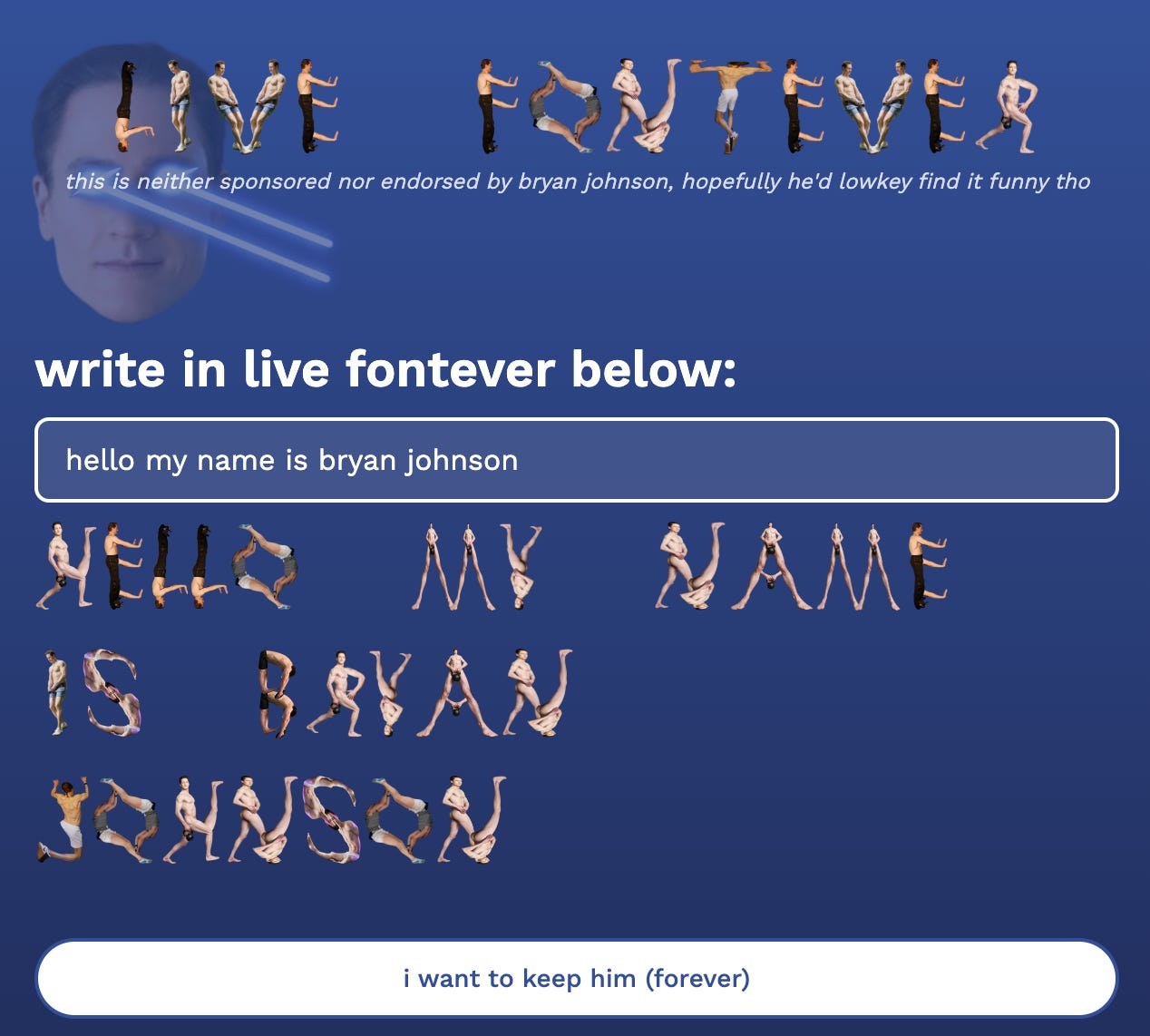
P.S. I had time to create this because I had a week off work! The other project I created was a tool that lets you type with a font made from Bryan Johnson (the millionaire who’s trying to live forever, notorious for swapping blood with his son). Check that out (if you dare) at livefontever.com.

Write in Bryan Johnsons (I know you’ve been dreaming of this all your life).

1

<rant> After a few frustrating bugs, I had to go to the gym for the sole purpose of letting my anger out. I went through every stage of grief. I’d fix one thing, and two others would break. The code got so complex that I started over four times, but ultimately went back to the original files because the complexity seemed inevitable. It seems so simple, but getting content to flow evenly across columns, not leave “orphaned” titles / images / captions, and just looking GOOD, was very difficult. I spent four hours on footnote formatting alone! </rant>

2

If you’re curious why: Every Substack publication has a RSS feed, which is basically a page that makes it easier for other websites/tools to read its content. It’s common practice for news sites, as it allows external tools to aggregate info from a bunch of different sources, without content getting messed up, and while citing the original source. You can find any Substack’s RSS feed at <publication-name>.substack.com/feed (e.g. rawandferal.substack.com/feed). My tool pulls from a Substack’s RSS feed. This takes processing time. So if I wanted to combine articles from multiple publications, I’d have to pull from multiple Substack RSS feeds, which would take more processing time, and also, RSS feeds generally limit the articles shown by recency and number (e.g. it only shows the last 10 articles and only those published after 2024; I don’t know the actual limits Substack uses, these numbers are just for illustration). So more realistically, if I wanted to combine specific articles across publications into one output newspaper, instead of pulling from the RSS feeds, I’d have to pull content directly from article webpages, which is much less reliable for an external tool to understand and organize. It’s possible, just much more complex.


Read the whole story
mrmarchant
16 hours ago
reply
Share this story
Delete

A Website To Destroy All Websites

1 Share
A Website To End All Websites | Henry From Online

A website to destroy all websites.

How to win the war for the soul of the internet and build the Web We Want.
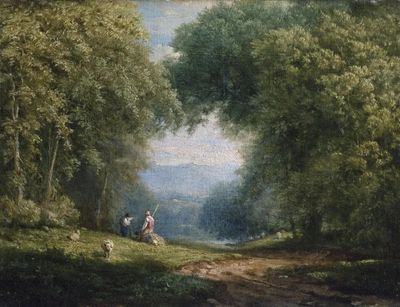
Captive Pegasus, Odilon Redon (1889)
A tiny website by Henry (from Online) ~3100 words; about a 15 minute read

table of contents, of course

  1. The internet is bad
  2. The invention of the automobile
  3. Tools for Conviviality & the industrialization of the Web
  4. The Web we want
  5. So where do we go from here?
  6. Denouement

part one.

Well, the Internet mostly feels bad these days.

We were given this vast, holy realm of self-discovery and joy and philosophy and community; a thousand thousand acres of digital landscape, on which to grow our forests and grasslands of imagination, plant our gardens of learning, explore the caves of our making. We were given the chance to know anything about anything, to be our own Prometheus, to make wishes and to grant them.

But that’s not what we use the Internet for anymore. These days, instead of using it to make ourselves, most of us are using it to waste ourselves: we’re doom-scrolling brain-rot on the attention-farm, we’re getting slop from the feed.

Instead of turning freely in the HTTP meadows we grow for each other, we go to work: we break our backs at the foundry of algorithmic content as this earnest, naïve, human endeavoring to connect our lives with others is corrupted. Our powerful drive to learn about ourselves, each other, and our world, is broken into scant remnants — hollow, clutching phantasms of Content Creation, speed-cut vertical video, listicle thought-leadership, ragebait and the thread emoji.

it wasn’t always like this.

Pastoral Scene, George Innes (1857)

It used to feel way better to Go Online, and some of us will remember.

We used to be able to learn about our hobbies and interests from hundreds of experts on a wealth of websites whose only shared motivation was their passion. Some of those venerable old educational blogs, forums, and wikis still stand, though most have been bulldozed.

Now, Learning On The Internet often means fighting ads and endless assaults on one’s attention — it means watching part-1-part-2-part-3 short-form video clips, taped together by action movie psychology hacks, narrated gracelessly by TTS AI voices. We’re down from a thousand and one websites to three, and each of those remaining monolith websites is just a soullessly-regurgitated, compression-down-scaled, AI-up-scaled version of the next.

We used to make lasting friendships with folks all over the world on shared interest and good humor.

But now those social networks, once hand-built and hand-tended, vibrant and organic, are unceremoniously swallowed by social media networks, pens built for trapping us and our little piggy attentions, turning us all into clout-chasers & content-creators, and removing us from what meaningful intimacy & community felt like.

Even coding for the web used to be different: One could Learn To Code™ to express oneself creatively, imbue one’s online presence with passion and meaning, and for some of us, build a real career.

These days, however, we write increasing amounts of complicated, unsecure code to express less and less meaning, in order to infinitely generate shareholder value. We don’t think about the art of our craft and the discipline of its application, we think about throughput and scale.

To be very clear: I’m not trying to Good Old Days the internet. None of this is meant to make you feel nostalgic — the Internet used to be slow and less populated and less diverse, and its access was limited to those of a certain class. The Web For All is a marked improvement, widespread global internet access is a marked improvement, and what I’m asking you to consider is what it used to feel like to use these tools, and what we’ve lost in the Big Tech, Web 2.0 and web3 devouring of the ’Net.


part two.

The invention of the automobile

Autoportrait, Tamara de Lempicka (1929)

The onset of the automobile was a revelation for access and personal liberty. With the advent of cars, members of society could travel farther, get more done in their day, and bend their limited time more to their creative will!

But as time wore on and the industrialization & proliferation of the automobile progressed, its marginal utility diminished — the industry started to offer society fewer & fewer benefits, and take more & more in exchange1.

In American cities, for example: though at first the automobile enabled humans to travel further distances, it now demanded that humans travel those distances, and demanded infrastructure be created & maintained to enable it.2 Many now must use an automobile to get everything done in their town in a day, and must pay & take time for that automobile’s fueling & maintenance.3

Further than that, the automobile asks all of us to chip in tax revenue to protect its infrastructure, but only certain classes can afford an automobile with which to use that infrastructure, and those classes who can’t afford to do so are relegated to underfunded public transit systems.4

No longer a tool to serve our societies, our societies now serve the automobile.


part three.

Tools for Conviviality, & the industrialization of the Web.

In his book Tools For Conviviality, technology philosopher and social critic Ivan Illich identifies these two critical moments, the optimistic arrival & the deadening industrialization, as watersheds of technological advent. Tools are first created to enhance our capacities to spend our energy more freely and in turn spend our days more freely, but as their industrialization increases, their manipulation & usurpation of society increases in tow5.

Illich also describes the concept of radical monopoly, which is that point where a technological tool is so dominant that people are excluded from society unless they become its users. We saw this with the automobile, we saw it with the internet, and we even see it with social media.

No longer a tool to serve our societies, our societies now serve the automobile. Instead of designing and using tools to build a society, our society changes to adapt to the demands of our tools.

Illich’s thesis allows us to reframe our adoption and use of the technologies in our life. We can map fairly directly most technological developments in the last 100 (or even 200) years to this framework: a net lift, followed by a push to extract value and subsequent insistence upon the technology’s ubiquity:

the textile revolution

The preferred imagery used to mythologize the Industrial Revolution is the woodetchings of textile manufacturers, transformed in the early 19th century by the arrival of automated fabric machinery. Its proponents laud the shift of an agricultural society to a technological one, creating new sectors for labor, and raising up the middle class (we will say nothing of this period’s new punishing conditions for labor in this essay6). But the ultimate ecological and human costs engendered by the increasing availability of cheap fabric production are well-documented: In 2022, the fashion and textile industries employed around 60 million factory workers worldwide7, and less than 2% of those workers earn a living wage. Those workers also endure the full suite of labor exploitation practices, including gender-based harassment, wage theft, and unsafe conditions. On the material side, the induced consumption resulting from ever-cheaper products means the world consumed 400% more textile products globally as 20 years ago8, and bins most of it (the average American generates 82 pounds of textile waste each year).

antibiotic technology

The arrival of antibiotics in 19289 allowed for revolutionary leaps in fighting bacterial infections like strep throat, pneumonia, and meningitis, but an over-dependence and over-prescription of penicillin and its siblings through the 1950s-70s resulted in the proliferation of antibiotic resistance, which subsequently led to longer hospital stays, higher medical costs, and increased mortality.10

space exploration

Since the beginning of the space exploration era in the late 1950s, humanity has made leaps and bounds in learning about our own world and its physical systems, telecommunications, imaging, etc. The increasing frequency of commercialization missions in space for satellite systems (and lately tourism) has resulted in immense amounts of space debris being generated — both from active satellites and from jettisoned/destroyed components of previous missions, the debris threatens future missions and has even been destructive to the field of astronomy, making it impossible to use earth-based sensors and photography devices to learn about space.11 So desperate to extract Shareholder Value from the starry sky, we’re blinding our own ability to look at it.

The web is no exception to this pattern. A vision of interoperability, accessibility, and usability, the World Wide Web was first conceived in 1989 as a way to universally link documents and other media content in a flexibly-organized system that could make information easily accessed at CERN, and be easily shared with collaborators beyond.12 But the proliferation of access and ultimate social requirement of access has spawned countless troubles for human society, including cyberstalking and bullying, the instantaneous circulation of CSAM, violent images, and misinformation, identity theft, addiction, etcetera.

The rampant industrialization and commercialization of the Web predictably develops flashy, insidious patterns of extracting capital from its users: new surfaces for information means new surfaces for advertisement, and new formats of media beget new mechanisms for divorcing you from their ownership.

convivial life & convivial tooling

Illich poses convivial tools as directly opposed to this industrialized, radically-monopolized set of social systems. Similar to E.F. Schumacher’s concept of “intermediate technology” introduced in his 1973 book Small Is Beautiful: A Study of Economics As If People Mattered, convivial tools are sustainable, energy-efficient (though often labor intensive), local-first, and designed primarily to enhance the autonomy and creativity of their users.13 Illich cites specifically hand tools, bicycles, and telephones as examples, but with its enormous capacity for interoperability and extensibility, the Internet is the perfect workshed in which to design our own Tools For Conviviality.
part four.

the Web we want

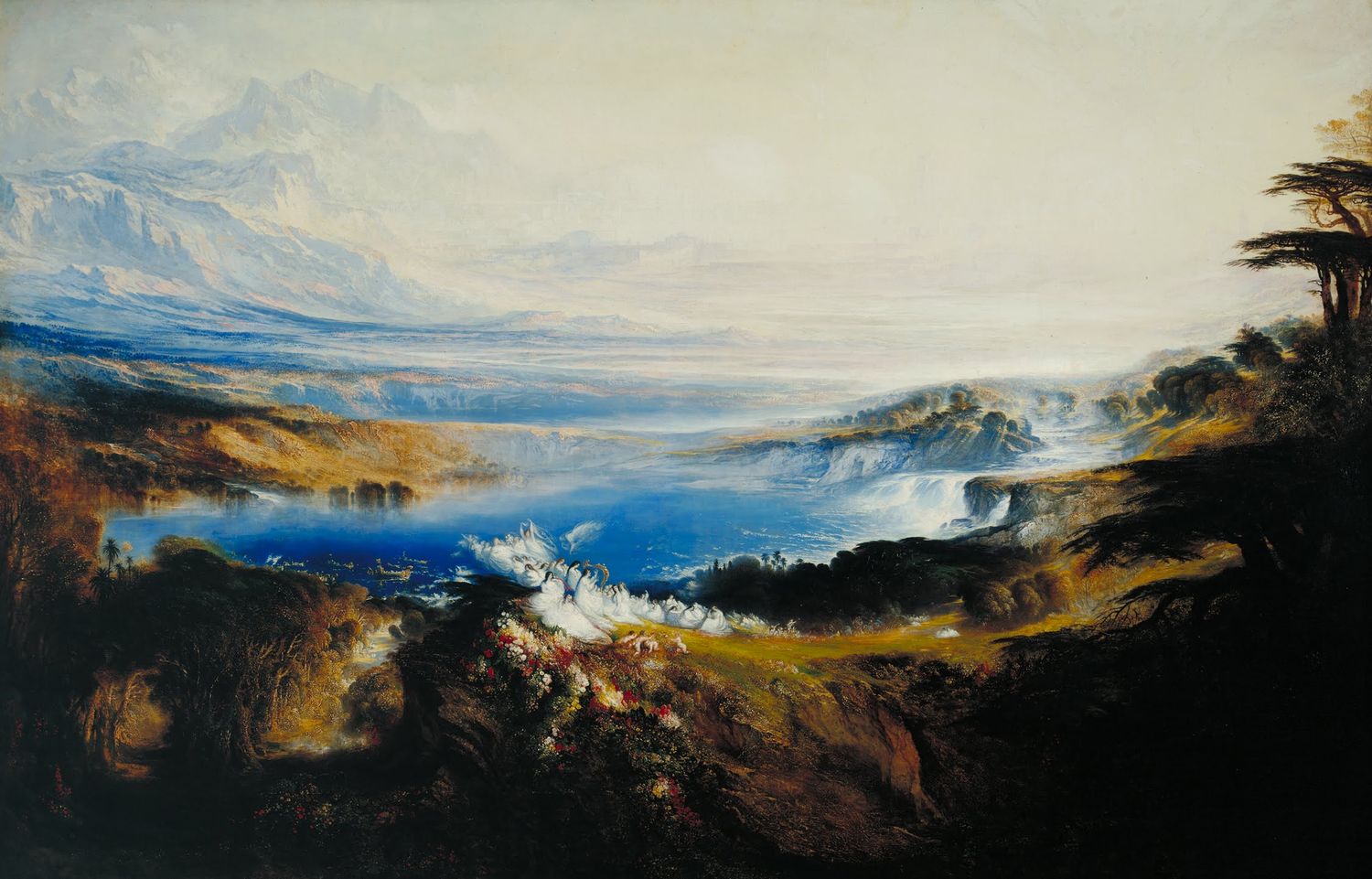
The Plains of Heaven, John Martin (1851-3)

let’s reconsider

the markers of a decaying 'Net I mentioned before, with convivial tooling in mind:

Teaching & learning on the Web

Monolithic platforms like YouTube, TikTok, Medium, and Substack draw a ton of creators and educators because of the promise of monetization and large audiences, but they’ve shown time and time again how the lack of ownership creates a problem. When those platforms fail, when they change their rules, when they demand creators move or create a particular way to maintain their access to those audiences, they pit creators or their audiences against the loss of the other. Without adhering to the algorithm’s requirements, writers may not write an impactful document, and without bypassing a paywall, readers can’t read it.

When those promises of exorbitant wealth and a life of decadence through per-click monetization ultimately dry up (or come with a steep moral or creative cost), creators and learners must look for new solutions for how educational content is shared on the Internet. The most self-evident, convivial answer is an old one: blogs. HTML is free to access by default, RSS has worked for about 130 years[citation needed], and combined with webmentions, it’s never been easier to read new ideas, experiment with ideas, and build upon & grow those ideas with other strong thinkers on the web, owning that content all along.14

Connecting with friends on the Web

Social media apps have imprisoned us all in this weird content prison — in order to connect with friends we’re sort of forced to create or be vanished by capricious black box algorithms, and all that we do create is, as we’ve already alluded to, subsequently owned by whatever platform we’ve created it on. If Instagram goes away overnight, or decides to pivot catastrophically, your stories and your network of friends goes with it.

The advent and development of tools & methodologies like POSSE (Publish On your Own Site, Syndicate Elsewhere), ActivityPub, microformats, and ATProto, it’s becoming quite achievable to generate your own social network, interoperable with other networks like Bluesky or Mastodon. That network, designed for ownership and decentralization, is durable, designed around storytelling instead of engagement, and free of the whims of weird tech billionaires.

With some basic HTML knowledge and getting-stuff-online knowledge, a handful of scrappy protocols, and a free afternoon or two, one can build their own home to post bangers for the tight homies, make friends, and snipe those new friends with those hits of dopamine they so fiendishly rely on.

Coding for the web

Lastly, consider the discipline of web engineering:

We have been asked to build the same B2B SaaS website with the same featureset n^∞ times, and our answers for the optimal way to do that are increasingly limited. We’ve penned all of our markup into JavaScript templates just in case a product manager needs the wrapper component to post JSON somewhere down the line, and we’ve whittled away at style code until it’s just a mechanism for deploying one of two border-radius-drop-shadow combos to divs. It’s an industrial, production-minded way of approaching a discipline that has all the hallmarks of being a great craft, and that’s understandably uninspiring to many of us.

Yet our young React shepherds have no need to fear: there are countless more colors than blurple out there, and countless more fonts than Inter. HTML and CSS are better and more generative technologies than they’ve ever been: Thanks to the tireless work of the CSS working groups and browser implementers, etc, there is an unbelievable amount of creative expression possible with basic web tools in a text editor. Even JavaScript is more progressively-ehanceable than ever, and enables interfacing with a rapidly-growing number of exciting browser APIs (still fuck Brendan Eich though). ${new Date.getCurrentYear()} is a veritable renaissance of web code, and it asks of authors only curiosity and a drive to experiment.


part five.

so where do we go from here?

The Abbey in the Oakwood, Caspar David Friedrich (1810)

Illich’s thesis is that technology and its derived tools should serve people in a way that enhances their freedom, creativity, independence, and will.

The distillation of those principles on the web through manual code, hand-built social networks, and blogs, points luminously to one answer to the question of how the Internet can best serve humans:

it’s personal websites.

Hand-coded, syndicated, and above all personal websites are exemplary: They let users of the internet to be autonomous, experiment, have ownership, learn, share, find god, find love, find purpose. Bespoke, endlessly tweaked, eternally redesigned, built-in-public, surprising UI and delightful UX. The personal website is a staunch undying answer to everything the corporate and industrial web has taken from us.

And how might one claim this ultimate toolchain of conviviality, and build a place on the web that enhances their autonomy and creativity?

How might one build a personal website?

  1. Start small

    Let yourself start small, have fun trying shit that doesn’t work, document your growth, publish failed ideas & successful ones. Some of the best websites in the world are just HTML, and they belong to their authors. Make friends, let yourself be inspired by others, send friendly emails asking to learn new things, and do not demand of yourself masterpieces.

  2. Reduce friction to publishing

    Get the resistance to ship out of your way. Don’t get caught up in tooling and frameworks, just write HTML and get something online. If you’re an engineer, delight that you’re not beholden to the same standards of quality and rigorous testing that you are at work — draft some ideas, hit the h1 to p tag combo, and publish. Update and update again; let your ideas grow like gardens, the way they do in your mind. The mutability of the web, often its great weakness, is also one of its great strengths.

  3. Don’t worry about design (unless you want to)

    Don’t worry about design unless that’s the part that brings you joy. Make friends with designers and trade your work for theirs, or trade tips, trade advice. Get comfortable with being joyfully bad at something — from that soil of humility grows a million questions for those who have learned and are excited to share. Iterate until you’ve something you’re proud of, or iterate so much you’ve ruined it and have to go back to bald.

  4. Use the IndieWeb

    Leverage the IndieWeb and its wonderfully thought-out protocols, tools like brid.gy to syndicate your ideas out to the wider web, and then use Webmentions to bring the ensuing conversations back where the content is. That way, you can publish work where you prefer to, folks on Bluesky can enjoy and discuss it, in the same stroke as folks on Mastodon may, or folks directly on the canonical URL.

  5. Join us in sharing what you’ve made

    I encourage you to join us in our auspicious website adventure, and if you do, I hope you’ll further join us on personalsit.es, our happy little home for everyone building something humble or thrilling or joyful or deeply accursed, but personal.

part six.

(denouement)

Sunrise on the Matterhorn, Albert Bierstadt (after 1875)

You’re not crazy. The internet does feel genuinely so awful right now, and for about a thousand and one reasons. But the path back to feeling like you have some control is to un-spin yourself from the Five Apps of the Apocalypse and reclaim the Internet as a set of tools you use to build something you can own & be proud of — or in most of our cases, be deeply ashamed of. Godspeed and good luck.

That’s all for me. If you find any issues with this post, please reach out to me by email. Thanks eternally for your time and patience, and thanks for reading. Find me here online at one of my personal websites like henry.codes or strange.website or stillness.digital or strangersbyspring.com, or sometimes on Bluesky and Mastodon.

As ever, unionize, free Palestine, trans rights are human rights, fix your heart or die.

fin.

go home


Works Cited

  1. Duany, Andres, et al. Suburban Nation: The Rise of Sprawl and the Decline of the American Dream. North Point Press, 2001.
  2. Shoup, Donald C. The High Cost of Free Parking. Routledge, 2017.
  3. Kunstler, James Howard. The Geography of Nowhere: The Rise and Decline of America’s Man-Made Landscape. Simon & Schuster, 1995.
  4. Cervero, Robert. The Transport Metropolis: A Global Enquiry. Island ; Kogan Page, 1999.
  5. Illich, Ivan. Tools for Conviviality. Harper & Row, 1973.
  6. “The Struggles of Labor.” United States History, U.S. Department of State, countrystudies.us/united-states/history-82.htm.
  7. “Global Fashion Industry Statistics.” FashionUnited, fashionunited.com/statistics/global-fashion-industry-statistics.
  8. “The True Cost.” CMV Laservision, 2016.
  9. “What Is Penicillin?” Cleveland Clinic Health Library, 17 Oct. 2025, my.clevelandclinic.org/health/treatments/penicillin.
  10. Antimicrobial Resistance: Global Report on Surveillance. World Health Organization, 2014.
  11. Borlaff, A.S., Marcum, P.M. & Howell, S.B. Satellite megaconstellations will threaten space-based astronomy. Nature 648, 51–57 (2025). https://doi.org/10.1038/s41586-025-09759-5
  12. Berners-Lee, Tim. “Information Management: A Proposal.” The Original Proposal of the WWW, HTMLized, Mar. 1989, www.w3.org/History/1989/proposal.html.
  13. Schumacher, Ernst Friedrich. Small Is Beautiful: Economics as If People Mattered. Harper Perennial, 1973.
  14. “Webmention.” IndieWeb, indieweb.org/Webmention.
Read the whole story
mrmarchant
20 hours ago
reply
Share this story
Delete

Two Nights Playing With Fire At Patrick Mahomes And Travis Kelce’s Steakhouse

1 Share

KANSAS CITY, Mo. — As celebrity restaurant mascots, athletes offer a tidy sense of vertical integration: Why not supply the very calories they need to expend on the field? I’m surprised there are so few successful models. We have all mostly forgotten (or agreed not to talk about) George Brett’s restaurant in Kansas City, Brett Favre’s Wisconsin steakhouse, or those 31 Papa John’s franchises Peyton Manning coincidentally shed two days before the NFL dropped the pizza chain as a sponsor.

Still, tables have been reliably booked at 1587 Prime—a mashup of Patrick Mahomes’s and Travis Kelce’s jersey numbers, along with a word that vaguely connotes “beef”—since it opened in Kansas City in August. I left an eight-year gig as a KC restaurant critic in 2023, but the mania surrounding the opening was enough to summon me out of retirement. Like a washed-up former detective, I couldn’t resist stumbling half-drunk into my old precinct for one last job.


Read the whole story
mrmarchant
3 days ago
reply
Share this story
Delete

Tiny wild cat spotted in Thailand for first time in 30 years

1 Share

Camera traps in Thailand have captured adorable passersby with significant implication for the country’s conservation efforts. While these furry creatures might look like your average house cat, they’re actually wild flat-headed cats (Prionailurus planiceps). These extremely rare wild felines weigh less than half an average pet cat, and they’ve been detected in Thailand for the first time since 1995.

The happy news was confirmed by a survey from Thailand’s Department of National Parks, Wildlife, and Plant Conservation, and Panthera Thailand, a global wild cat conservation organization, according to a statement emailed to Popular Science

“Even species thought to be lost can be rebuilt if we invest in protecting the habitats they depend on,” said Wai Ming Wong, Panthera Small Cat Conservation Science Director. “Flat-headed cats’ persistence in Thailand suggests that these ecosystems still hold remarkable biodiversity but also underscores how urgently we must conserve and restore them before they vanish entirely.” 

Flat-headed cats are named for their particular flat forehead and extended skull. They are Southeast Asia’s smallest wild cat, and have short bodies, slim legs, webbed toes, and stubby tails. They’re also difficult to study. Besides their limited population numbers, they’re small, nocturnal, and favor hard-to-access environments—tropical rainforests, swampy and peat-swamp forests, marshes, lakes, streams, and riverine forests. 

a small wild cat walks on leaves
Flat-headed cats are the smallest wild cat in Southeast Asia. Image: DNP/Panthera Thailand

Researchers believe them to be close relatives of leopard cats and fishing cats, and estimate a total population size of 2,500 adults. Flat-headed cats are one of the most threatened wild cats—the International Union for Conservation of Nature (IUCN) classifies them as Endangered, and “possibly extinct” within Thailand

Nevertheless, remote camera trap images confirmed the wild cat’s reappearance.The traps picked up 13 detections in 2024 and 16 in southern Thailand’s Princess Sirindhorn Wildlife Sanctuary in 2025, within the context of the species’ largest survey. Notably, a mother and her cub were also spotted, verifying the species’ active reproduction in the area. It’s an important find, since flat-headed cat mothers usually have just one kitten  at a time. 

a small wild cat in reeds
A rare image of a Flat-headed Cat (Prionailurus planiceps) at night, Kinabatangan River, Sabah, Borneo, Malaysia. Image: Sebastian Kennerknecht/Panthera.

The flat-headed cat is currently threatened by human-driven habitat loss from land conversion, fishing, agricultural encroachment, hunting, waterway pollution, and domestic animals transmitting diseases. Competition for space further decreases its range, limiting the wild cat to mostly far-flung, untouched environments whose protection is thus crucial. 

“With this new finding, which we plan to submit to the IUCN Red List Committee, we hope the species’ status can be updated to something other than ‘Possibly Extinct,’” Rattapan Pattanarangsan, Conservation Program Manager for Panthera Thailand, tells Popular Science, while adding that the Committee might need more data they don’t possess yet. “Generating this level of evidence will likely require several years of further study before the species’ status can be fully reassessed.”

The announcement comes in time for National Wildlife Protection Day on December 26. The  flat-headed cat detection will lay the groundwork for DNP and Panthera Thailand’s conservation planning regarding the species. 

The post Tiny wild cat spotted in Thailand for first time in 30 years appeared first on Popular Science.


Read the whole story
mrmarchant
3 days ago
reply
Share this story
Delete
Next Page of Stories